Newsroom
Environmental Product Impact on Foodservice Brands

Environmental Product Impact on Foodservice Brands
More than 60 percent of American businesses are now prioritizing environmental products as part of their sustainability plans. This growing shift reflects a broader recognition of the urgent need to reduce waste, conserve resources, and respond to evolving customer expectations. Understanding what truly defines an environmental product, and how it can benefit foodservice operations, helps leaders make smart, responsible choices that support long-term success.
Table of Contents
- Defining Environmental Products For Businesses
- Types Of Environmental Products In Foodservice
- Features Of Sustainable Straw Alternatives
- Legal Standards And Certification Requirements
- Costs, Risks, And Market Comparisons
Key Takeaways
| Point | Details |
|---|---|
| Importance of Environmental Products | Businesses should integrate environmental considerations into their strategic frameworks to minimize ecological impact while providing functional value. |
| Key Factors for Environmental Products | Lifecycle assessments, material transparency, third-party verification, and measurable sustainability metrics are critical for qualifying as an environmental product. |
| Categories in Foodservice | The foodservice industry is shifting towards biodegradable serviceware, reusable items, and eco-friendly packaging to enhance sustainability and reduce waste. |
| Financial and Market Considerations | Companies must analyze the financial implications and market risks associated with transitioning to environmental products to ensure long-term success. |
Defining Environmental Products for Businesses
Businesses today are increasingly recognizing the critical role of environmental products in driving sustainable practices across industries. An environmental product represents more than just a commodity - it embodies a comprehensive approach to minimizing ecological impact while delivering functional value. These products are carefully designed to reduce environmental strain through strategic material selection, manufacturing processes, and lifecycle management.
The concept of environmental products extends beyond simple green marketing claims. According to research on sustainable business models, organizations must integrate economic, environmental, and social goals into their strategic frameworks. Sustainable business models describe how companies create, deliver, and capture value in an environmentally responsible manner, fundamentally transforming how products are conceived and brought to market.
To qualify as an environmental product, businesses must consider multiple critical factors:
- Lifecycle Assessment: Comprehensive evaluation of environmental impact from raw material extraction through production, distribution, use, and disposal
- Material Transparency: Clear documentation of product composition and environmental characteristics
- Third-Party Verification: Independent assessment of environmental claims
- Measurable Sustainability Metrics: Quantifiable reduction in carbon footprint, waste generation, or resource consumption
Moreover, Environmental Product Declarations (EPDs) provide crucial transparency by quantifying environmental information about a product’s entire lifecycle, enabling businesses to communicate their ecological performance with precision and credibility.
Pro Tip - Environmental Product Strategy: Develop a holistic approach to environmental product design by conducting comprehensive lifecycle assessments and consistently tracking sustainability performance metrics across your entire product portfolio.
Types of Environmental Products in Foodservice
The foodservice industry is experiencing a significant transformation in product selection, with a growing emphasis on environmental product categories that minimize ecological impact. Disposable food packaging now encompasses a wide range of materials designed to reduce environmental strain, moving beyond traditional single-use plastics to more sustainable alternatives.
Environmental products in foodservice can be broadly categorized into several key types:
-
Biodegradable Serviceware
- Plates and bowls made from bamboo, sugarcane, or palm leaf materials
- Compostable utensils crafted from plant-based polymers
- Paper products sourced from sustainable forestry practices
-
Reusable Food Service Items
- Durable ceramic and glass dishware
- Stainless steel utensils and serving equipment
- Long-lasting food storage containers made from recycled materials
-
Eco-Friendly Packaging Solutions
- Packaging designed to minimize waste across restaurant and delivery operations, including recyclable and compostable containers
- Minimalist packaging that reduces overall material consumption
- Packaging made from renewable or recycled content
The evolution of disposable tableware now reflects a nuanced approach to environmental responsibility, with manufacturers focusing on creating products that balance convenience, functionality, and ecological considerations. Modern environmental products in foodservice are not just about replacing traditional items, but reimagining how these essential tools can support broader sustainability goals.

Here’s a summary of how different environmental product categories impact foodservice operations:
| Category | Primary Benefit | Common Example | Business Impact |
|---|---|---|---|
| Biodegradable Serviceware | Reduces landfill contribution | Bamboo plates, bagasse utensils | Enhances eco-friendly branding |
| Reusable Food Service Items | Lowers ongoing waste | Stainless steel cutlery, glass plates | Decreases long-term supply costs |
| Eco-Friendly Packaging | Minimizes material use | Compostable takeout boxes | Improves customer perceptions |
Pro Tip - Sustainable Product Selection: Conduct a comprehensive audit of your current food service products, identifying opportunities to replace single-use items with environmentally responsible alternatives that reduce waste and demonstrate your commitment to ecological stewardship.
Features of Sustainable Straw Alternatives
Sustainable straw alternatives represent a critical innovation in reducing environmental waste, offering foodservice brands transformative solutions to traditional plastic products. Sustainable straw designs are engineered to minimize environmental impact by utilizing biodegradable materials that decompose more readily than conventional plastic options, addressing growing consumer demand for eco-friendly alternatives.
Key features of sustainable straw alternatives include:
-
Material Composition
- Biodegradable components from plant-based sources
- Natural materials like bamboo, wheat, and paper
- Renewable resources with minimal environmental processing
-
Performance Characteristics
- Comparable structural integrity to traditional plastic straws
- Temperature resistance for hot and cold beverages
- Minimal flavor transfer or material degradation during use
-
Environmental Benefits
- Rapid biodegradation compared to petroleum-based plastics
- Reduced carbon footprint during manufacturing
- Potential for complete decomposition without long-term environmental contamination
The evolution of sustainable straw technology demonstrates how eco-friendly alternatives can provide functionality similar to traditional products while addressing critical environmental concerns. Modern sustainable straws are not merely substitutes, but sophisticated solutions designed to meet the complex demands of contemporary foodservice operations.
Pro Tip - Sustainable Straw Transition: Implement a gradual transition strategy by first introducing sustainable straw alternatives in select product lines, gathering customer feedback, and systematically expanding eco-friendly options across your entire service menu.
Legal Standards and Certification Requirements
Navigating the complex landscape of environmental product regulations requires a comprehensive understanding of legal standards and certification frameworks that govern sustainable business practices. Environmental Product Declarations (EPDs) represent a critical standardized mechanism for documenting and verifying ecological performance, providing businesses with a structured approach to environmental transparency.
Key legal and certification components include:
-
International Certification Standards
- ISO 14025 environmental documentation protocols
- Third-party verification processes
- Comprehensive life cycle assessment requirements
-
Regulatory Compliance Frameworks
- Environmental impact reporting mandates
- Sustainable manufacturing guidelines
- Waste reduction and material sourcing regulations
-
Verification and Documentation
- Detailed environmental impact measurements
- Independent audit processes
- Transparent reporting mechanisms
The International Resource Panel provides scientific assessments that directly influence the development of legal standards and environmental certification requirements, ensuring that businesses have clear guidance for implementing sustainable practices. These frameworks are not just bureaucratic checklists, but sophisticated tools that enable companies to demonstrate genuine environmental commitment.
The following table compares key legal standards and certifications for environmental products:
| Standard/Certification | Focus Area | Typical Requirement |
|---|---|---|
| ISO 14025 | Transparent environmental reporting | Third-party verified EPDs |
| Local Sustainability Laws | Regional product compliance | Mandatory waste reduction measures |
| Third-Party Audits | Independent verification of claims | Annual reviews and documentation |
Pro Tip - Compliance Strategy: Develop a proactive certification approach by maintaining comprehensive documentation, conducting regular internal audits, and staying informed about evolving environmental regulations in your industry.
Costs, Risks, and Market Comparisons
Environmental product transitions represent a complex strategic decision for foodservice brands, requiring careful analysis of financial implications and market dynamics. The foodservice industry faces significant environmental implications that directly impact operational costs and risk management strategies, necessitating a nuanced approach to sustainable product implementation.
Key cost and risk considerations include:
-
Financial Investment Factors
- Initial procurement expenses for sustainable alternatives
- Potential long-term cost savings through reduced waste
- Pricing strategies for environmentally responsible products
-
Market Risk Assessment
- Consumer perception and willingness to accept new products
- Competitive positioning within industry segments
- Potential brand reputation enhancement
-
Comparative Market Analysis
- Price differential between traditional and sustainable options
- Performance metrics and functional comparisons
- Market adoption rates across different industry sectors
Environmental product innovations can significantly influence perceived brand value, with ethical considerations playing a critical mediating role in market acceptance. Businesses must carefully balance the economic investments against potential market advantages, including enhanced customer loyalty and competitive differentiation.
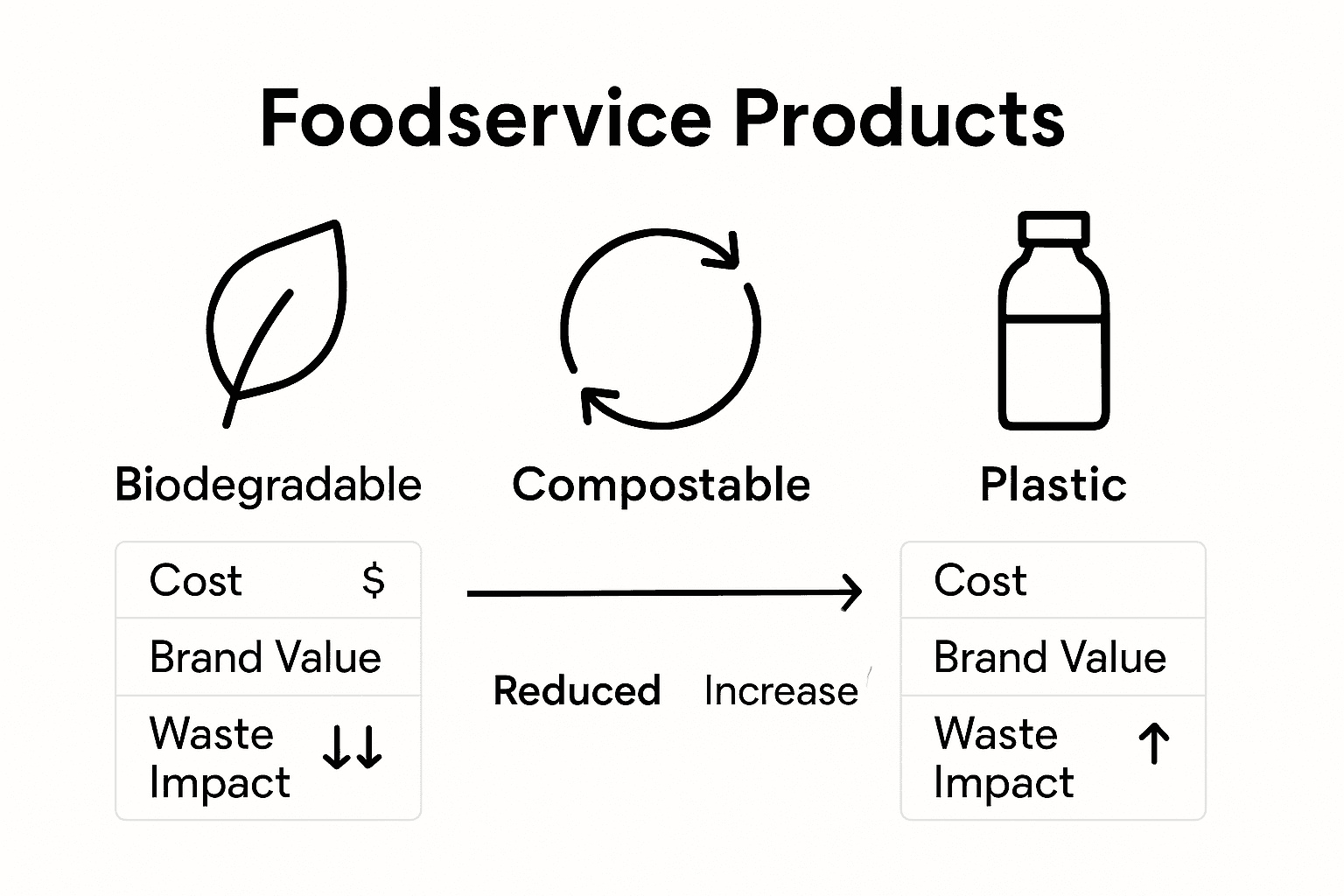
Pro Tip - Strategic Cost Management: Conduct a comprehensive total cost of ownership analysis that goes beyond initial procurement expenses, evaluating long-term savings, waste reduction potential, and brand value appreciation associated with sustainable product investments.
Elevate Your Foodservice Brand with Sustainable Straw Solutions
The shift toward environmental products in foodservice demands practical and effective alternatives that align with your sustainability goals. This article highlights critical challenges such as integrating biodegradable materials, managing lifecycle impacts, and balancing cost with environmental benefits. Addressing these pain points, TheOceanStraw.com offers premium reusable straws crafted from innovative wood and plant-based materials that deliver durability, safety, and true biodegradability. Our products support the reduction of single-use plastics while enhancing your brand’s eco-friendly image through measurable sustainability metrics.
Discover how switching to sustainable straws can transform your foodservice operations today. Visit TheOceanStraw.com to explore detailed product specifications, certifications, and eco-advantages. Take the next step by requesting samples or connecting with our wholesale team to integrate high-quality, environmentally responsible straws tailored to your business needs. Act now to lead your market segment with innovative environmental products that resonate with conscious consumers.
Frequently Asked Questions
What are environmental products in the foodservice industry?
Environmental products in foodservice refer to items designed to minimize ecological impact, such as biodegradable serviceware, reusable food service items, and eco-friendly packaging solutions.
How can businesses assess the sustainability of their foodservice products?
Businesses can assess sustainability through lifecycle assessments, material transparency, third-party verification, and measurable sustainability metrics that quantify environmental performance.
What are the benefits of using biodegradable serviceware over traditional plastics?
Biodegradable serviceware reduces landfill contributions and environmental contamination, offering functional alternatives that decompose more readily. This enhances a brand’s eco-friendly image and attracts environmentally conscious consumers.
How do sustainable straw alternatives differ from traditional plastic straws?
Sustainable straw alternatives are made from biodegradable materials like bamboo or paper, providing comparable functionality without contributing to long-term plastic pollution. They decompose faster than traditional plastic straws, aligning with environmental goals.