Newsroom
What Is Sustainable Sourcing? Guide for Hotels and Restaurants 2025

What Is Sustainable Sourcing? Guide for Hotels and Restaurants 2025
Sustainable sourcing is reshaping how hotels and restaurants choose suppliers and products. Even though most operations still focus on price and quality, 65 percent of travelers say they prefer to book with eco-friendly hospitality brands. That sounds like a recipe for extra costs, right? But many hotels are actually discovering that true sustainable sourcing brings real savings and stronger customer loyalty, flipping old assumptions upside down.
Table of Contents
- Understanding What Is Sustainable Sourcing
- Benefits Of Sustainable Sourcing For Hospitality
- How To Start Sustainable Sourcing In 2025
- Overcoming Common Challenges And Myths
Quick Summary
| Takeaway | Explanation |
|---|---|
| Sustainable sourcing impacts procurement decisions | Emphasizes integrating environmental, social, and economic factors into purchasing choices. |
| Implement a clear sourcing strategy | Develop specific goals and assessment criteria for supplier selection to enhance sustainability efforts. |
| Sustainability boosts brand reputation | Engaging in responsible practices attracts eco-conscious customers and builds loyalty, differentiating your business. |
| Overcome sustainability myths | Address misconceptions regarding cost and complexity to foster genuine adoption of sustainable practices. |
| Build a culture of sustainability | Involve the entire organization in sustainability initiatives, ensuring continuous improvement and engagement. |
Understanding What Is Sustainable Sourcing
Sustainable sourcing represents a strategic approach that transforms how businesses in the hospitality industry procure goods and services. At its core, sustainable sourcing goes beyond traditional purchasing methods by integrating environmental, social, and economic considerations into procurement decisions.
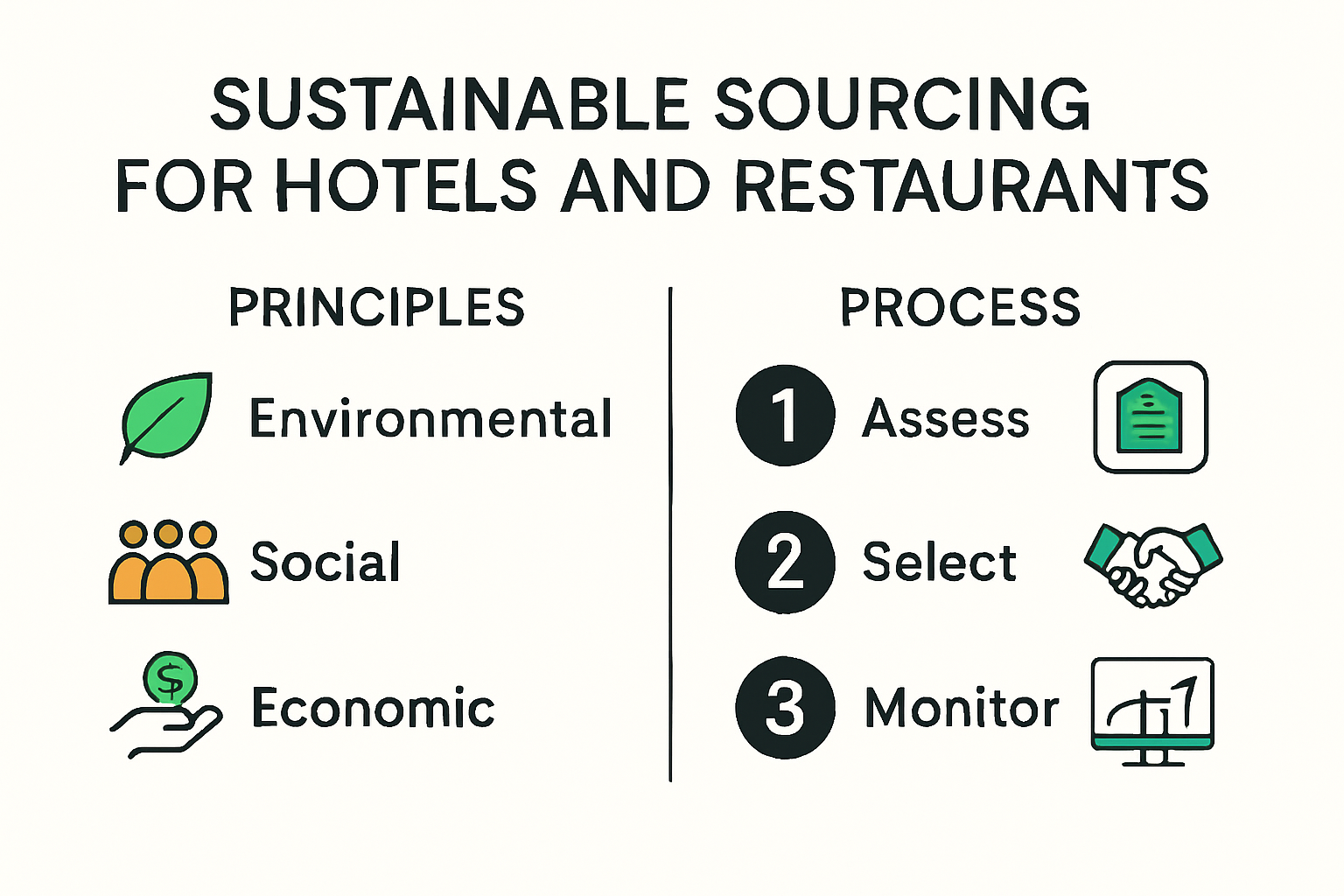
The Fundamental Principles of Sustainable Sourcing
Sustainable sourcing is more than a trend. According to the American Hotel & Lodging Association, it involves carefully selecting suppliers and materials that meet rigorous standards of environmental stewardship and social responsibility. This approach requires hotels and restaurants to look beyond price and quality, examining the broader impact of their purchasing decisions.
The process involves multiple critical components:
- Environmental Responsibility: Selecting suppliers who minimize carbon footprint, reduce waste, and protect natural resources.
- Social Impact: Ensuring fair labor practices, supporting local communities, and promoting ethical working conditions.
- Economic Sustainability: Supporting suppliers who contribute to long-term economic development and maintain transparent business practices.
To help visualize the three pillars of sustainable sourcing, the following table summarizes their core focus areas and examples related to hospitality:
| Pillar | Focus Areas | Hospitality Example |
|---|---|---|
| Environmental | Carbon reduction, waste minimization, resource use | Sourcing reusable linens, local produce |
| Social | Fair labor, local community support, ethics | Partnering with suppliers who pay living wage |
| Economic | Transparency, long-term development, fair pricing | Selecting vendors with stable, open practices |
Why Sustainable Sourcing Matters for Hospitality Businesses
In an era of increasing environmental awareness, sustainable sourcing has become a strategic imperative. Research on sustainable procurement indicates that businesses implementing comprehensive sustainable sourcing strategies can achieve significant benefits.
Hotels and restaurants that embrace sustainable sourcing can:
- Reduce their overall environmental impact
- Enhance brand reputation and customer loyalty
- Create more resilient supply chains
- Demonstrate commitment to corporate social responsibility
The hospitality industry faces unique challenges in sustainable sourcing. Food and beverage procurement involves complex global supply chains, making it critical to develop robust strategies for tracking and verifying sustainability credentials. This means working closely with suppliers who can provide transparent information about their production methods, environmental practices, and social impact.
Successful sustainable sourcing requires a holistic approach. It is not just about selecting individual products but creating a comprehensive procurement strategy that aligns with broader organizational values and sustainability goals. Businesses must develop clear criteria for evaluating suppliers, implement rigorous monitoring systems, and continuously improve their sourcing practices.
By understanding and implementing sustainable sourcing principles, hotels and restaurants can transform their procurement processes from transactional interactions to strategic partnerships that create positive environmental and social change. The journey toward sustainable sourcing is ongoing, requiring continuous learning, adaptation, and commitment to making responsible choices that benefit both the business and the broader global community.
Benefits of Sustainable Sourcing for Hospitality
Sustainable sourcing offers transformative advantages for hotels and restaurants that extend far beyond traditional business practices. By strategically integrating sustainability into procurement processes, hospitality businesses can unlock significant operational, financial, and reputational benefits.
Economic Advantages and Cost Efficiency
Contrary to common misconceptions, sustainable sourcing can drive substantial economic value. According to Vaia’s sustainability research, implementing a comprehensive sustainability strategy leads to meaningful cost savings and competitive advantages.
Key economic benefits include:
- Reduced Operational Expenses: Sustainable sourcing often involves more efficient resource utilization, leading to lower long-term costs.
- Risk Mitigation: By diversifying supplier networks and focusing on resilient procurement strategies, businesses can reduce supply chain vulnerabilities.
- Enhanced Operational Efficiency: Streamlined sustainable procurement processes can eliminate waste and optimize resource allocation.

Brand Reputation and Customer Engagement
Hotel Management research highlights that sustainable food sourcing significantly enhances guest experiences and fosters customer loyalty. Modern travelers and diners increasingly prioritize businesses that demonstrate genuine environmental and social responsibility.
Branding advantages of sustainable sourcing include:
- Attracting environmentally conscious consumers
- Building stronger emotional connections with guests
- Differentiating from competitors through authentic sustainability commitments
- Creating compelling storytelling opportunities around responsible business practices
The following table summarizes the main benefits of sustainable sourcing for hospitality businesses, as outlined in this section:
| Benefit Category | Key Advantage | Example Impact |
|---|---|---|
| Economic | Lower operational costs, risk mitigation | Reduced utility spend, stable supply chains |
| Brand Reputation | Attract eco-conscious customers, loyalty | More repeat bookings, positive guest feedback |
| Environmental & Social | Reduction in carbon footprint, social responsibility | Supporting fair labor, regional suppliers, less waste |
Long-Term Environmental and Social Impact
Sustainable sourcing enables hospitality businesses to become active participants in global sustainability efforts. By carefully selecting suppliers who adhere to rigorous environmental and social standards, hotels and restaurants can contribute to broader systemic changes.
Environmental and social benefits encompass:
- Reducing overall carbon footprint
- Supporting local and regional economies
- Promoting fair labor practices
- Protecting biodiversity and natural resources
- Encouraging sustainable agricultural and production methods
Implementing sustainable sourcing is not just a strategic choice but a comprehensive approach to responsible business management. It requires ongoing commitment, continuous learning, and a willingness to challenge traditional procurement paradigms.
Hotels and restaurants that embrace sustainable sourcing position themselves as forward-thinking organizations capable of meeting the evolving expectations of environmentally aware consumers. By integrating economic efficiency, brand reputation enhancement, and meaningful environmental stewardship, sustainable sourcing becomes a powerful tool for holistic business transformation.
How to Start Sustainable Sourcing in 2025
Implementing sustainable sourcing in 2025 requires a strategic and comprehensive approach that goes beyond traditional procurement methods. Hotels and restaurants must develop a systematic framework to transform their supply chain practices and align with global sustainability standards.
Developing a Sustainable Sourcing Strategy
The foundation of successful sustainable sourcing begins with creating a clear, actionable strategy. According to the Food and Agriculture Organization, developing an effective local sourcing strategy involves careful planning and collaboration with regional producers.
Key steps for developing a sustainable sourcing strategy include:
- Conduct a Comprehensive Supply Chain Audit: Assess current procurement practices and identify areas for improvement.
- Set Clear Sustainability Targets: Establish measurable goals for reducing environmental impact and promoting social responsibility.
- Create Supplier Assessment Criteria: Develop rigorous evaluation metrics that go beyond traditional cost and quality considerations.
Implementing Sustainable Procurement Practices
Marriott International’s Serve360 initiative provides an excellent blueprint for systematic sustainable sourcing. The approach involves targeting specific product categories and developing comprehensive sourcing guidelines.
Practical implementation strategies include:
- Prioritize local and regional suppliers
- Develop transparent supplier selection processes
- Implement robust tracking and verification systems
- Create incentive programs for suppliers meeting sustainability standards
- Invest in supplier education and development programs
Building a Culture of Sustainability
Sustainable sourcing is not just a procurement strategy but a fundamental organizational transformation. Success requires commitment from leadership, engagement of all team members, and continuous improvement.
Critical cultural elements include:
- Training staff on sustainable sourcing principles
- Creating cross-departmental sustainability teams
- Developing transparent reporting mechanisms
- Celebrating and recognizing sustainability achievements
- Encouraging innovative approaches to sustainable procurement
Businesses must recognize that sustainable sourcing is an evolving journey. It requires ongoing commitment, flexibility, and a willingness to adapt to changing environmental and social landscapes. The most successful organizations will view sustainable sourcing as a strategic opportunity rather than a compliance requirement.
By 2025, sustainable sourcing will be more than a competitive advantage. It will be a fundamental expectation for hospitality businesses. Hotels and restaurants that start implementing comprehensive strategies now will be well-positioned to meet future challenges and consumer expectations. The key is to begin with clear intentions, develop robust systems, and maintain a commitment to continuous improvement and learning.
Overcoming Common Challenges and Myths
Sustainable sourcing in the hospitality industry faces numerous challenges and persistent misconceptions that can hinder progress. Understanding and addressing these barriers is crucial for businesses committed to implementing meaningful sustainability strategies.
Debunking Sustainability Myths
According to research from the Sustainable Restaurant Association, many businesses harbor misconceptions that prevent them from adopting sustainable practices. The most prevalent myth suggests that sustainability is prohibitively expensive and offers minimal business benefits.
Common myths that need deconstruction include:
- Cost Misconception: Believing sustainable sourcing is always more expensive
- Impact Doubt: Assuming individual actions have negligible environmental impact
- Complexity Barrier: Perceiving sustainable sourcing as too complicated to implement
Here’s a table summarizing the main myths about sustainable sourcing and the realities that counter them, as discussed:
| Myth | Reality |
|---|---|
| Sustainability is expensive | Can drive long-term savings and efficiency |
| Individual impact is small | Collective action leads to measurable benefits |
| Too complex to implement | Step-by-step strategies and resources are available |
Addressing Authenticity and Greenwashing Concerns
Boston University research highlights the critical challenge of greenwashing. Businesses must move beyond superficial sustainability claims and demonstrate genuine commitment through transparent, verifiable practices.
Strategies to ensure authenticity include:
- Obtaining third-party sustainability certifications
- Publishing detailed sustainability reports
- Implementing measurable and trackable sustainability goals
- Providing clear evidence of environmental and social impact
- Engaging independent auditors to verify sustainability claims
Navigating Operational Challenges
Cornell University’s hospitality research reveals the complex landscape of implementing sustainable sourcing. The most significant challenges include measuring environmental impact, aligning stakeholder goals, and effectively communicating sustainability initiatives.
Key operational strategies for overcoming these challenges:
- Develop comprehensive sustainability measurement frameworks
- Create cross-functional sustainability teams
- Invest in staff training and education
- Establish clear communication channels with suppliers
- Develop technology-driven tracking and reporting systems
Businesses must recognize that sustainable sourcing is not a one-time initiative but a continuous journey of improvement. The most successful organizations approach sustainability as a strategic opportunity rather than a compliance requirement.
Overcoming challenges requires a multifaceted approach. Hospitality businesses must combine robust research, transparent communication, measurable goals, and a genuine commitment to environmental and social responsibility. By addressing myths, ensuring authenticity, and developing strategic approaches, hotels and restaurants can transform sustainable sourcing from a potential obstacle into a significant competitive advantage.
The future of hospitality lies in businesses that can effectively integrate sustainability into their core operational strategy. Those who approach this challenge with creativity, commitment, and strategic thinking will not only contribute to global sustainability efforts but also position themselves as industry leaders in an increasingly conscious marketplace.
Frequently Asked Questions
What is sustainable sourcing in the hospitality industry?
Sustainable sourcing is a procurement approach that integrates environmental, social, and economic considerations into purchasing decisions, focusing on minimizing negative impacts while maximizing positive outcomes for communities and the planet.
Why does sustainable sourcing matter for hotels and restaurants?
Sustainable sourcing is essential for hotels and restaurants because it helps reduce environmental impact, enhances brand reputation, attracts eco-conscious customers, and promotes long-term resilience within supply chains.
How can hotels and restaurants start sustainable sourcing in 2025?
To begin sustainable sourcing, hotels and restaurants should develop a clear strategy, conduct a comprehensive supply chain audit, set measurable sustainability targets, and implement transparent supplier assessment criteria.
What are the benefits of sustainable sourcing for hospitality businesses?
The benefits of sustainable sourcing include economic advantages such as cost savings and operational efficiency, enhanced brand reputation attracting loyal customers, and positive long-term environmental and social impacts.
Power Your Sustainable Sourcing With Certified Compostable Straws
Hospitality businesses today face the challenge of balancing true sustainable sourcing with operational efficiency and guest appeal. The article showed how hotels and restaurants are under pressure to meet eco-conscious guest expectations. It also explained how materials matter for both environmental impact and brand credibility. One of the biggest pain points is finding reliable, authentic products that back up your sustainability commitment and help you avoid greenwashing traps.
You have a chance to make immediate progress on your sustainable sourcing strategy by choosing solutions that are easy to implement and make a real difference. With The Ocean Straw, you get wood and plant based straws that are truly compostable and designed for the HoreCa market. Every purchase supports lower waste and genuine environmental responsibility. Turn words into action for your business now. Visit The Ocean Straw website and see how simple it can be to take your procurement goals to the next level. Make your next sourcing decision count for the planet and your reputation.