Newsroom
What is FSC Certification? Understanding Its Importance
What is FSC Certification? Understanding Its Importance
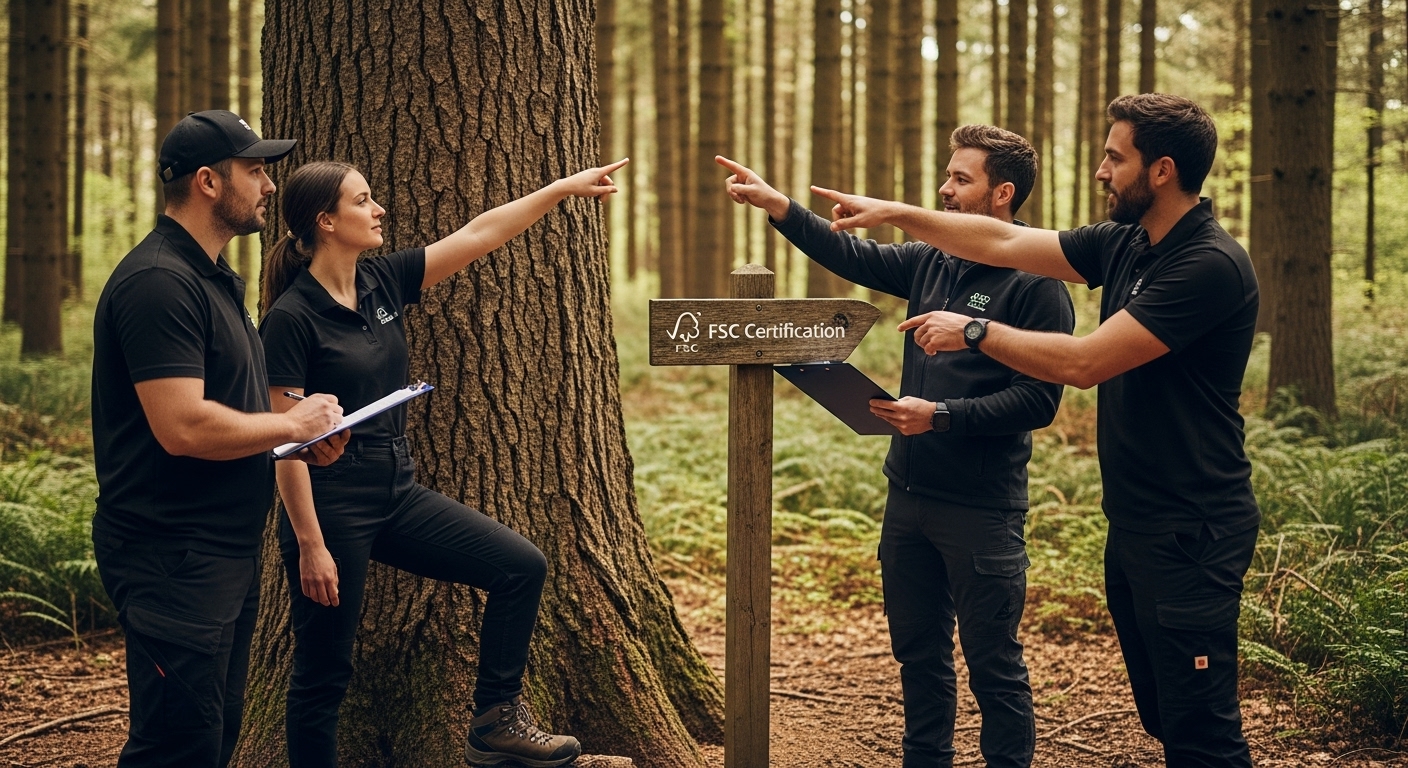
FSC certification has become a symbol that pops up on everything from paper to furniture, hinting at deep-rooted responsibility. Most people spot the green tree logo and assume it just means less deforestation. But the real story runs deeper. FSC sets over 70 strict criteria for environmental and social safeguards around the world. Think it is all about trees? Actually, it is about protecting people, entire ecosystems, and future economies in ways that completely flip the script on traditional forest management.
Table of Contents
- Defining Fsc Certification: A Foundation For Sustainability
- The Importance Of Fsc Certification For Businesses
- How Fsc Certification Works: The Process Explained
- Key Principles Behind Fsc Certification
- Real-World Impacts Of Fsc Certification On The Environment
Quick Summary
| Takeaway | Explanation |
|---|---|
| FSC certification ensures sustainable forest management | It verifies that wood products come from responsibly managed forests, balancing environmental and social needs. |
| Businesses gain competitive advantages from FSC certification | Certified products enhance brand reputation and trust while accessing sustainable procurement markets. |
| Chain of custody tracking ensures transparency | It provides verifiable documentation of certified materials from the forest to the final product. |
| FSC promotes biodiversity and habitat preservation | The standards protect ecosystems by prioritizing habitat conservation and scientifically informed practices. |
| Certification addresses social responsibility | Respecting indigenous rights and fair labor practices are integral to sustainable forestry principles. |
Defining FSC Certification: A Foundation for Sustainability
FSC certification represents a pivotal standard in sustainable forest management and responsible wood product sourcing. The Forest Stewardship Council (FSC) provides a globally recognized certification system that ensures wood and paper products come from responsibly managed forests, protecting ecological systems while supporting economic and social sustainability.
Understanding the FSC Framework
At its core, FSC certification is an independent verification process that tracks wood products from forest to consumer. When a product bears the FSC logo, it guarantees that the materials have been sourced through environmentally appropriate, socially beneficial, and economically viable forest management practices.
Key characteristics of the FSC certification framework include:
- Comprehensive forest management standards that protect biodiversity
- Transparent supply chain tracking and verification
- Strict environmental protection guidelines
- Protection of indigenous peoples’ rights and local community interests
- Promotion of worker safety and fair labor practices
Global Impact and Significance
The World Wildlife Fund recognizes FSC certification as a critical tool in combating deforestation and promoting sustainable forestry. By creating economic incentives for responsible forest management, FSC helps preserve critical ecosystems while supporting local communities that depend on forest resources.
Businesses and consumers increasingly choose FSC-certified products because they represent a tangible commitment to environmental stewardship. The certification goes beyond simple compliance, creating a holistic approach to forest conservation that balances ecological preservation with human needs.
Ultimately, FSC certification serves as a powerful mechanism for transforming global forestry practices, encouraging responsible resource management, and protecting the planet’s vital forest ecosystems for current and future generations.
The Importance of FSC Certification for Businesses
Businesses today face increasing pressure to demonstrate environmental responsibility and sustainable practices. FSC certification has emerged as a powerful tool for companies seeking to align their operations with global sustainability standards and meet growing consumer expectations for ethical sourcing.
Strategic Business Advantages
FSC certification offers businesses more than just an environmental credential. It provides a strategic framework for differentiating products, enhancing brand reputation, and accessing markets that prioritize sustainable procurement. Companies that adopt FSC certification can unlock significant competitive advantages in an increasingly environmentally conscious marketplace.
Key strategic benefits include:

- Enhanced brand credibility and consumer trust
- Access to environmentally sensitive procurement markets
- Demonstration of corporate social responsibility commitments
- Reduced risk of reputational damage from unsustainable sourcing
- Potential cost savings through efficient resource management
Economic and Regulatory Compliance
McKinsey & Company reports that sustainable business practices are no longer optional but essential for long term economic success. FSC certification helps businesses proactively address emerging environmental regulations and investor expectations around sustainable supply chains.
Companies in sectors like hospitality, food service, packaging, and construction can particularly benefit from FSC certification. By choosing certified materials, businesses signal their commitment to responsible resource management and environmental stewardship.
Moreover, FSC certification provides a transparent mechanism for tracking and verifying sustainable sourcing practices, enabling businesses to make meaningful contributions to global forest conservation while maintaining economic viability and competitive advantage.
How FSC Certification Works: The Process Explained
The FSC certification process is a comprehensive and rigorous system designed to ensure responsible forest management and sustainable wood product sourcing. This multi-stage verification approach involves detailed assessments, ongoing monitoring, and strict compliance standards that transform forest management practices.
Forest Management Certification
The first critical stage involves evaluating forest operations against stringent FSC standards. Independent, accredited certification bodies conduct thorough audits to verify that forest managers meet comprehensive environmental, social, and economic criteria.
Key aspects of forest management certification include:
- Protection of indigenous peoples’ rights and local community interests
- Maintenance of high conservation value forests
- Preservation of ecological systems and biodiversity
- Sustainable harvesting practices
- Legal compliance and worker safety standards
Chain of Custody Tracking
Sustainalytics highlights the importance of transparent supply chain management in sustainable sourcing. FSC’s chain of custody certification ensures that certified materials are tracked from forest to final product, creating a transparent and verifiable process of material origin and handling.
Companies seeking FSC certification must demonstrate:
- Documented procedures for tracking certified materials
- Segregation of certified and non-certified materials
- Accurate record-keeping of material sources
- Regular internal and external audits
- Compliance with FSC labeling requirements
Ultimately, the FSC certification process represents a comprehensive approach to verifying sustainable forestry practices.
The following table outlines the major stages of the FSC certification process, making it easy to understand the steps and responsible parties involved at each stage.
| Stage | Description | Responsible Party |
|---|---|---|
| Application & Planning | Prepare and submit certification application | Forest Manager/Company |
| Assessment & Audit | Independent evaluation against FSC standards | Accredited Certification Body |
| Certification Decision | Granting FSC certification if standards are met | Certification Body |
| Ongoing Monitoring | Annual assessments and compliance checks | Certification Body/Organization |
| Chain of Custody | Tracking certified materials through every step in the supply chain | Company/Certification Body |
Key Principles Behind FSC Certification
FSC certification is built upon a comprehensive framework of principles that extend far beyond traditional environmental standards. These guiding principles represent a holistic approach to forest management that balances ecological preservation, social responsibility, and economic sustainability.
Environmental Stewardship
At the heart of FSC certification lies a profound commitment to environmental protection. The certification goes beyond simple conservation, focusing on maintaining complex ecological systems and promoting biodiversity. Forests are viewed as living ecosystems that require nuanced, scientifically informed management approaches.
Critical environmental principles include:
- Protecting endangered species and their habitats
- Maintaining ecological functions and forest integrity
- Preventing chemical pollution and minimizing environmental disruption
- Supporting natural forest regeneration processes
- Conserving forest landscapes and high conservation value areas
Social and Economic Responsibility
United Nations Environment Programme emphasizes that sustainable forest management must integrate social and economic considerations. FSC certification recognizes that forest conservation cannot succeed without addressing the needs of local communities and workers.
Key social and economic principles encompass:
- Respecting indigenous peoples’ rights and traditional knowledge
- Ensuring fair labor practices and worker safety
- Supporting local economic development
- Creating mechanisms for community engagement
- Promoting equitable economic opportunities for forest-dependent communities
These principles reflect a sophisticated understanding that environmental sustainability is intrinsically linked with human welfare.
Below is a table summarizing the main principles of FSC certification, quickly showing how environmental, social, and economic considerations are addressed.
| Principle | Key Focus Area | Example Initiative |
|---|---|---|
| Environmental Stewardship | Biodiversity & Ecosystem Protection | Maintaining ecological integrity and natural forests |
| Social Responsibility | Indigenous & Community Rights | Ensuring participation and recognizing land rights |
| Economic Responsibility | Sustainable Economic Benefits | Supporting fair wages and local economic growth |
| Transparency & Accountability | Supply Chain Traceability | Chain of custody tracking and clear labeling |
| Worker Protection | Safety & Fair Labor Standards | Implementing safe working conditions and fair wages |
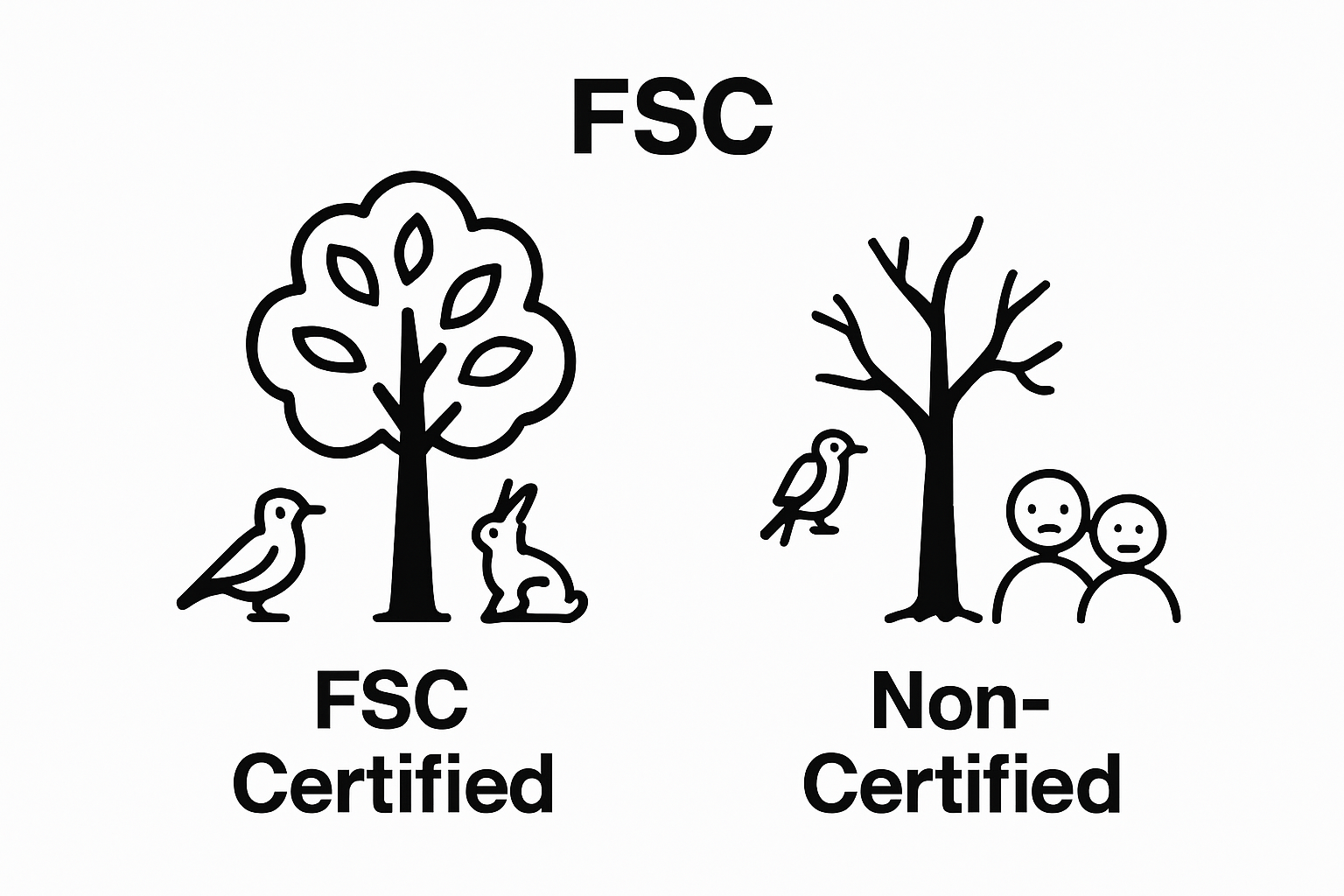 By establishing a framework that considers ecological, social, and economic dimensions, FSC certification provides a comprehensive approach to responsible forest management that extends well beyond traditional conservation strategies.
Real-World Impacts of FSC Certification on the Environment
FSC certification represents a tangible mechanism for translating environmental principles into measurable conservation outcomes. By establishing rigorous standards and implementing comprehensive monitoring systems, the certification has generated significant positive environmental impacts across global forest ecosystems.
Biodiversity Conservation
FSC certification plays a critical role in protecting complex ecological systems and maintaining biodiversity. Unlike conventional logging practices, FSC-certified forests prioritize habitat preservation and species protection through scientifically informed management strategies.
Key biodiversity protection measures include:
- Maintaining critical wildlife corridors
- Preserving habitat for endangered species
- Limiting destructive logging practices
- Protecting old-growth forest areas
- Supporting natural forest regeneration processes
Climate Change Mitigation
World Resources Institute highlights that FSC-certified forests serve as critical carbon sinks, playing a significant role in global climate change mitigation strategies. By promoting sustainable forest management, these certified areas help preserve forest carbon stocks and reduce greenhouse gas emissions.
Environmental benefits of FSC certification in climate change mitigation encompass:
- Reducing deforestation rates
- Maintaining forest carbon storage capacities
- Supporting forest restoration initiatives
- Promoting sustainable land use practices
- Protecting watershed ecosystems
Through its comprehensive approach, FSC certification transforms forest management from a purely extractive industry into a sophisticated conservation strategy that balances human needs with ecological preservation. By creating economic incentives for responsible forest management, the certification mechanism provides a practical pathway for protecting our planet’s most valuable ecosystems.
Bring Genuine FSC Impact Into Your Business with Ocean Straw Solutions
You have learned that FSC certification is not just a label. It is a promise of environmental responsibility, sustainable sourcing, and social progress. But turning commitments into real-world impact can be challenging for HoreCa businesses who want to meet rising customer expectations while upholding the highest sustainability standards. Maybe you worry about finding trustworthy partners or ensuring your disposables are both planet-friendly and credible. That is where the pain point arises: bridging the gap between FSC ideals and the everyday choices that shape your business reputation.
Discover a better way. At Ocean Straw, we deliver wood and plant based straws crafted with certified sustainable materials. Our compostable straws are designed specifically for the HoreCa sector, making it easy for you to align with FSC’s rigorous standards and show your customers you care. You get transparency, compliance, and quality every time you choose our products. Your commitment to FSC principles becomes part of every customer experience.
Upgrade your sustainability standards now. Visit Ocean Straw for wood and plant based straws that truly help you meet your FSC and environmental goals. Take the first step toward a greener, more trustworthy business by choosing solutions your customers can believe in. Act today and make your sustainability values visible.
Frequently Asked Questions
What does FSC certification mean?
FSC certification stands for Forest Stewardship Council certification, which verifies that wood and paper products come from responsibly managed forests. It ensures ecological protection and supports social and economic sustainability.
How does the FSC certification process work?
The FSC certification process involves thorough assessments of forest management practices and the supply chain. Independent bodies evaluate compliance with environmental, social, and economic criteria, ensuring sustainable sourcing and tracking of certified materials from forest to consumer.
Why is FSC certification important for businesses?
FSC certification helps businesses demonstrate a commitment to environmental responsibility and sustainable practices. It enhances brand credibility, opens access to eco-sensitive markets, and reduces the risk of reputational damage related to unsustainable sourcing.
What are the environmental benefits of FSC certification?
FSC certification promotes biodiversity conservation, protects endangered species, and mitigates climate change by maintaining forest carbon stocks. It fosters responsible management practices that limit deforestation and promote ecosystem health.