Newsroom
What Are Sustainable Materials? Guide for Hotels and Restaurants 2025

What Are Sustainable Materials? Guide for Hotels and Restaurants 2025
Sustainable materials have become a driving force for hotels and restaurants that want to do more than just meet regulations. But did you know that hotels using eco friendly materials can cut operational costs by up to 30 percent while attracting a new wave of eco conscious guests. The real surprise is that these choices are not just about saving the planet. They are reshaping the bottom line and transforming the way people experience hospitality.
Table of Contents
- Understanding What Are Sustainable Materials
- Benefits Of Sustainable Materials For Hospitality
- Top Sustainable Material Choices In 2025
- How To Source Sustainable Materials For Hotels And Restaurants
Quick Summary
| Takeaway | Explanation |
|---|---|
| Sustainable materials minimize environmental impact. | These materials reduce ecological harm while meeting operational needs for hotels and restaurants. |
| Economic benefits include cost savings. | Adopting sustainable materials can lower utility expenses and enhance property value through durability. |
| Guest experience improves with eco-friendly choices. | Sustainable materials create healthier environments, attracting eco-conscious consumers who prioritize sustainable practices. |
| Strategic sourcing is essential for sustainability. | Establish partnerships with suppliers committed to responsible practices and verify their environmental credentials rigorously. |
| Continuous improvement is key in sourcing. | Develop comprehensive frameworks and regularly update strategies to keep pace with new sustainable technologies. |
Understanding What Are Sustainable Materials
Sustainable materials represent a critical evolution in how businesses approach resource consumption and environmental responsibility. At their core, these materials are designed to minimize ecological impact while delivering high performance across industries like hospitality and food service.
Defining Sustainable Materials in Context
The National Renewable Energy Laboratory provides a comprehensive definition of sustainable materials as resources that prioritize resource efficiency and environmental stewardship. For hotels and restaurants, this means selecting materials that not only meet operational needs but also significantly reduce carbon footprint and promote long term ecological balance.
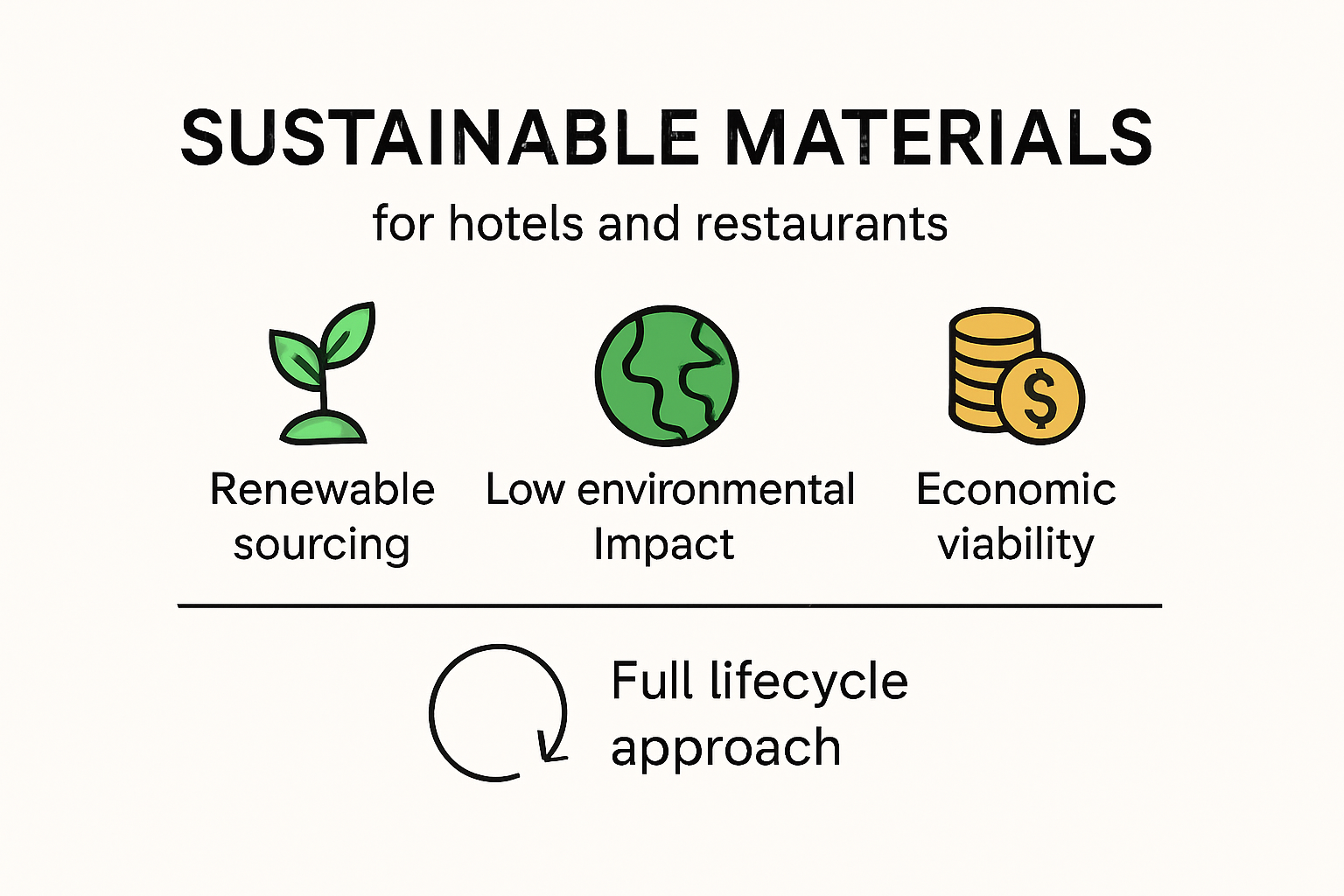
Sustainable materials go beyond simple recycling. They encompass a holistic approach that considers the entire lifecycle of a product from raw material extraction to eventual disposal or regeneration. This approach requires examining multiple factors such as renewable sourcing, energy consumption during production, durability, and potential for future reuse or biodegradation.
Key Characteristics of Sustainable Materials
Effective sustainable materials share several critical characteristics that make them valuable for modern businesses. Renewable sourcing stands as the primary foundation where materials are derived from sources that can be naturally replenished within a reasonable timeframe. This might include bamboo, agricultural waste products, or responsibly managed forest resources.
Low environmental impact represents another crucial attribute. According to Environmental Protection Agency research, sustainable materials should minimize greenhouse gas emissions, reduce water consumption, and limit toxic chemical interactions during their entire lifecycle.
Additionally, sustainable materials must demonstrate economic viability. They cannot simply be environmentally friendly but must also provide competitive performance and cost effectiveness. For hotels and restaurants, this means materials that are durable, functional, and capable of meeting rigorous industry standards while maintaining environmental integrity.
The transition toward sustainable materials represents more than an environmental choice. It is a strategic business decision that signals commitment to responsible practices, attracts environmentally conscious consumers, and positions organizations as forward thinking leaders in their respective industries.
Understanding sustainable materials requires recognizing they are not a singular solution but a complex ecosystem of interconnected choices that collectively contribute to broader environmental conservation efforts. By carefully selecting materials that balance performance, cost, and ecological responsibility, businesses can create meaningful positive impact.
Benefits of Sustainable Materials for Hospitality
Sustainable materials offer transformative advantages for hotels and restaurants that extend far beyond environmental considerations. These materials represent a strategic approach to business operations that simultaneously addresses ecological responsibility, financial performance, and guest experience.
Economic Advantages of Sustainable Material Choices
Research from Hospitality Net demonstrates that sustainable practices lead to significant cost savings. By adopting materials and systems that reduce energy and water consumption, businesses can dramatically lower utility expenses. For instance, energy efficient lighting and HVAC systems powered by sustainable materials can decrease operational costs by up to 30 percent.
Moreover, the economic benefits are not limited to immediate cost reductions. According to VAIA research, green building materials enhance property value through increased durability and lower maintenance requirements. Hotels investing in sustainable materials often experience higher asset appreciation and can command premium pricing from environmentally conscious travelers.
Enhanced Guest Experience and Brand Reputation
Sustainable materials directly contribute to creating healthier, more appealing environments for guests. Cesar Ritz Colleges research indicates that eco friendly materials improve indoor air quality, reduce toxic emissions, and create spaces that feel more natural and wellness oriented.
Brands that demonstrate genuine commitment to sustainability attract a growing demographic of environmentally aware consumers. These guests are not just seeking accommodation but an experience that aligns with their personal values. By showcasing sustainable material choices, hotels and restaurants can differentiate themselves in a competitive market, potentially increasing customer loyalty and attracting new clientele.
Environmental and Social Impact
Beyond immediate business benefits, sustainable materials contribute to broader environmental conservation efforts. Each sustainable material choice represents a vote for responsible resource management. Hotels and restaurants can significantly reduce their carbon footprint by selecting materials that minimize waste, support renewable resources, and promote circular economy principles.
Additionally, choosing sustainable materials often supports local economies and ethical supply chains. By prioritizing materials from responsible sources, businesses can contribute to community development, fair labor practices, and global sustainability goals.
The strategic adoption of sustainable materials is no longer a optional consideration but a fundamental business imperative. Forward thinking hospitality businesses recognize that these materials represent more than just an environmental statement. They are a comprehensive approach to creating resilient, efficient, and socially responsible operations that can thrive in an increasingly conscious global marketplace.
Top Sustainable Material Choices in 2025
As the hospitality industry continues to evolve, material selection becomes increasingly critical for businesses committed to sustainability. The year 2025 presents a landscape of innovative and environmentally responsible material choices that balance performance, aesthetics, and ecological impact.
Sustainable Textiles and Fabrics
Textile Expertise Network highlights emerging textile innovations that are transforming hospitality environments. Organic natural fibers like cotton, wool, and linen remain foundational, but innovative materials are pushing boundaries. Emerging alternatives such as pineapple leather and mushroom leather offer exciting possibilities for upholstery, bedding, and decorative elements.
These advanced textiles are evaluated not just on their immediate appearance, but on comprehensive sustainability metrics. Certifications like GOTS (Global Organic Textile Standard) and OEKO-TEX Standard 100 provide crucial verification of environmental and ethical production standards. Hotels and restaurants can now select materials that tell a story of environmental responsibility while maintaining exceptional quality and aesthetic appeal.

Architectural and Structural Materials
The Hindu reports significant developments in sustainable architectural materials. Reclaimed wood stands out as a premier choice, offering unique aesthetic value while reducing demand for virgin timber. Bamboo and cane emerge as versatile materials for flooring, furniture, and decorative elements, providing durability and a connection to natural design principles.
Additionally, Economic Times Hospitality emphasizes the importance of low-VOC paints and finishes. These materials significantly improve indoor air quality by minimizing airborne pollutants, creating healthier environments for guests and staff alike.
Innovative Sustainable Material Technologies
Beyond traditional materials, 2025 introduces groundbreaking sustainable solutions. Recycled metals for structural components, cork for advanced flooring systems, and bio-based composites represent the cutting edge of material innovation. These materials are not just environmentally responsible but also demonstrate superior performance characteristics.
The selection of sustainable materials in 2025 goes beyond simple environmental compliance. It represents a holistic approach to design that considers lifecycle impact, aesthetic quality, functional performance, and broader ecological implications. Hotels and restaurants choosing these materials are making a statement about their commitment to progressive, responsible business practices.
As technologies advance and consumer awareness grows, the landscape of sustainable materials will continue to expand. The most forward thinking hospitality businesses will view material selection as a strategic opportunity to differentiate themselves, create memorable guest experiences, and contribute to global sustainability efforts.
How to Source Sustainable Materials for Hotels and Restaurants
Sourcing sustainable materials requires a strategic and comprehensive approach that goes beyond simple purchasing decisions. For hotels and restaurants committed to environmental responsibility, creating a robust sustainable sourcing strategy involves careful planning, research, and ongoing evaluation.
Establishing Sustainable Supplier Partnerships
The National Restaurant Association recommends developing partnerships with suppliers who prioritize sustainability as a core business value. This means conducting thorough due diligence to understand potential suppliers’ environmental practices, certifications, and commitment to responsible resource management.
Key evaluation criteria for sustainable suppliers include:
- Transparent supply chain documentation
- Verified environmental certifications
- Commitment to reducing carbon emissions
- Local and regional production capabilities
- Demonstrated innovation in sustainable material development
Businesses should request comprehensive sustainability reports, audit supplier practices, and establish long term relationships with vendors who demonstrate genuine commitment to ecological responsibility.
Strategies for Material Selection and Verification
Research from Eco-Guide for Hospitality Businesses highlights the importance of selecting materials from local artisans and manufacturers who utilize sustainably grown resources. This approach not only reduces transportation emissions but also supports local economies and ensures greater transparency in material sourcing.
Effective material verification involves multiple steps:
- Requesting third party sustainability certifications
- Conducting independent material lifecycle assessments
- Evaluating material origin and production methods
- Assessing potential for future recycling or biodegradation
Implementing a Comprehensive Sustainable Sourcing Framework
Developing a holistic sustainable materials strategy requires more than individual purchasing decisions. Organizations must create comprehensive frameworks that integrate sustainability across procurement processes. This includes establishing clear sustainability metrics, training purchasing teams, and developing ongoing evaluation mechanisms.
Successful implementation involves:
- Creating detailed sustainability purchasing guidelines
- Establishing clear environmental performance benchmarks
- Regularly reviewing and updating sourcing strategies
- Investing in staff training on sustainable material selection
- Maintaining flexibility to adapt to emerging sustainable technologies
The journey toward sustainable material sourcing is continuous. Hotels and restaurants must view this as an ongoing commitment to environmental stewardship, recognizing that sustainability is not a destination but a dynamic, evolving process of continuous improvement.
By approaching sustainable material sourcing with strategic thinking, rigorous evaluation, and a genuine commitment to environmental responsibility, businesses can transform their purchasing practices into powerful tools for positive ecological impact.
Here is a summary table comparing different types of sustainable materials mentioned in the article, their applications in hospitality, and their key sustainability features:
| Material Type | Example Uses | Key Sustainability Feature |
|---|---|---|
| Organic Natural Fibers | Bedding, upholstery, textiles | Renewable sourcing, certified production |
| Pineapple/Mushroom Leather | Upholstery, decorative elements | Plant-based, biodegradable |
| Reclaimed Wood | Flooring, furniture, interiors | Reduces demand for virgin timber |
| Bamboo & Cane | Flooring, furniture, décor | Rapid renewability, regional sourcing |
| Low-VOC Paints & Finishes | Walls, indoor surfaces | Improves indoor air quality |
| Recycled Metals | Structural components | Reuse of existing resources |
| Cork | Advanced flooring systems | Renewable, biodegradable |
| Bio-based Composites | Structural/architectural elements | Low environmental impact, innovation |
The following table outlines key supplier evaluation criteria and material verification steps to help hotels and restaurants create robust sustainable material sourcing frameworks:
| Supplier Evaluation Criteria | Material Verification Steps |
|---|---|
| Transparent supply chain | Request third-party sustainability certifications |
| Verified environmental certifications | Conduct lifecycle assessments |
| Commitment to carbon reduction | Evaluate material origin and production |
| Local/regional production | Assess potential for recycling or biodegradation |
| Innovation in material development |
Frequently Asked Questions
What are sustainable materials?
Sustainable materials are resources designed to minimize ecological impact while maximizing performance. They prioritize renewable sourcing, low environmental impact, and economic viability, helping businesses reduce their carbon footprint and operating costs.
How can hotels and restaurants benefit from using sustainable materials?
Hotels and restaurants can experience significant cost savings, improved guest experiences, and enhanced brand reputation by incorporating sustainable materials. These materials can lower utility expenses and attract eco-conscious guests, driving customer loyalty and increasing property value.
What types of sustainable materials are recommended for hospitality in 2025?
Top sustainable materials for hospitality in 2025 include organic natural fibers, pineapple and mushroom leather, reclaimed wood, bamboo, low-VOC paints, recycled metals, cork, and bio-based composites. Each material offers unique sustainability features beneficial for eco-friendly design.
How can businesses source sustainable materials effectively?
Businesses can source sustainable materials by establishing partnerships with eco-conscious suppliers, conducting thorough evaluations of potential vendors, and implementing comprehensive sustainable sourcing frameworks that include clear sustainability metrics and regular assessments.
Take the Lead in Sustainable Hospitality with Compostable Straws
Are you struggling to align your hotel’s or restaurant’s operations with the newest sustainable materials standards? The article revealed that sourcing truly sustainable products is more than just a compliance checkbox. It is a business-defining strategy. Many properties overlook the smaller details that guests notice, like the switch to compostable straws made from wood and plant-based materials. These choices quickly set your venue apart, reinforce your eco-credentials, and support your long-term commitment to minimizing environmental impact.
Make your move today and replace wasteful plastics with compostable straws designed for the HoreCa industry. See how The Ocean Straw helps you integrate eco conscious solutions that meet the expectations of modern travelers. Explore our latest sustainable straw options, take your sustainable sourcing to the next level, and showcase visible proof of your environmental progress. Start now to stay ahead of industry trends and inspire loyalty among your eco-minded guests.