Newsroom
Understanding Food Contact Regulations for the Hospitality Industry

Understanding Food Contact Regulations for the Hospitality Industry
Food contact regulations decide what materials can safely touch your food in restaurants and kitchens. You might expect this is all about packaging, but it covers everything from storage bins to cooking equipment. The real surprise is just how far these rules reach and the level of detail involved—everything from a serving spoon to a prep table must meet strict safety checks to block harmful chemicals from leaching into your meal.
Table of Contents
- What Are Food Contact Regulations and Their Purpose?
- Why Food Contact Regulations Matter For Your Business
- Key Components Of Food Contact Regulations Explained
- How Food Contact Materials Are Assessed And Approved
- Real-World Implications And Challenges Of Food Contact Regulations
Quick Summary
| Takeaway | Explanation |
|---|---|
| Understand food contact regulations’ importance. | They protect consumer health by preventing chemical migration from food contact materials. |
| Implement rigorous compliance strategies. | Regular assessments, staff training, and documentation are essential for meeting safety standards. |
| Proactively manage operational challenges. | Adapt to regulatory changes by investing in flexible compliance frameworks and continuous education. |
| Build consumer trust through safety practices. | Demonstrating commitment to food safety enhances brand reputation and customer confidence. |
| Monitor regulatory updates continuously. | Staying informed about evolving regulations helps businesses adapt and maintain compliance effectively. |
What Are Food Contact Regulations and Their Purpose?
Food contact regulations represent a critical framework designed to protect consumer health and ensure food safety across the hospitality industry. These comprehensive guidelines govern the materials and substances that can legally interact with food during preparation, storage, and service.
Understanding the Fundamental Purpose
Food contact regulations are systematic rules that control how materials and equipment interact with food products. Their primary objective is preventing potential chemical migration from packaging, containers, processing equipment, and food service tools into consumable items. The regulations establish strict standards to minimize health risks associated with unintended chemical transfers.
European Food Safety Authority defines these regulations as essential protective measures that address potential contamination pathways. Key focus areas include:
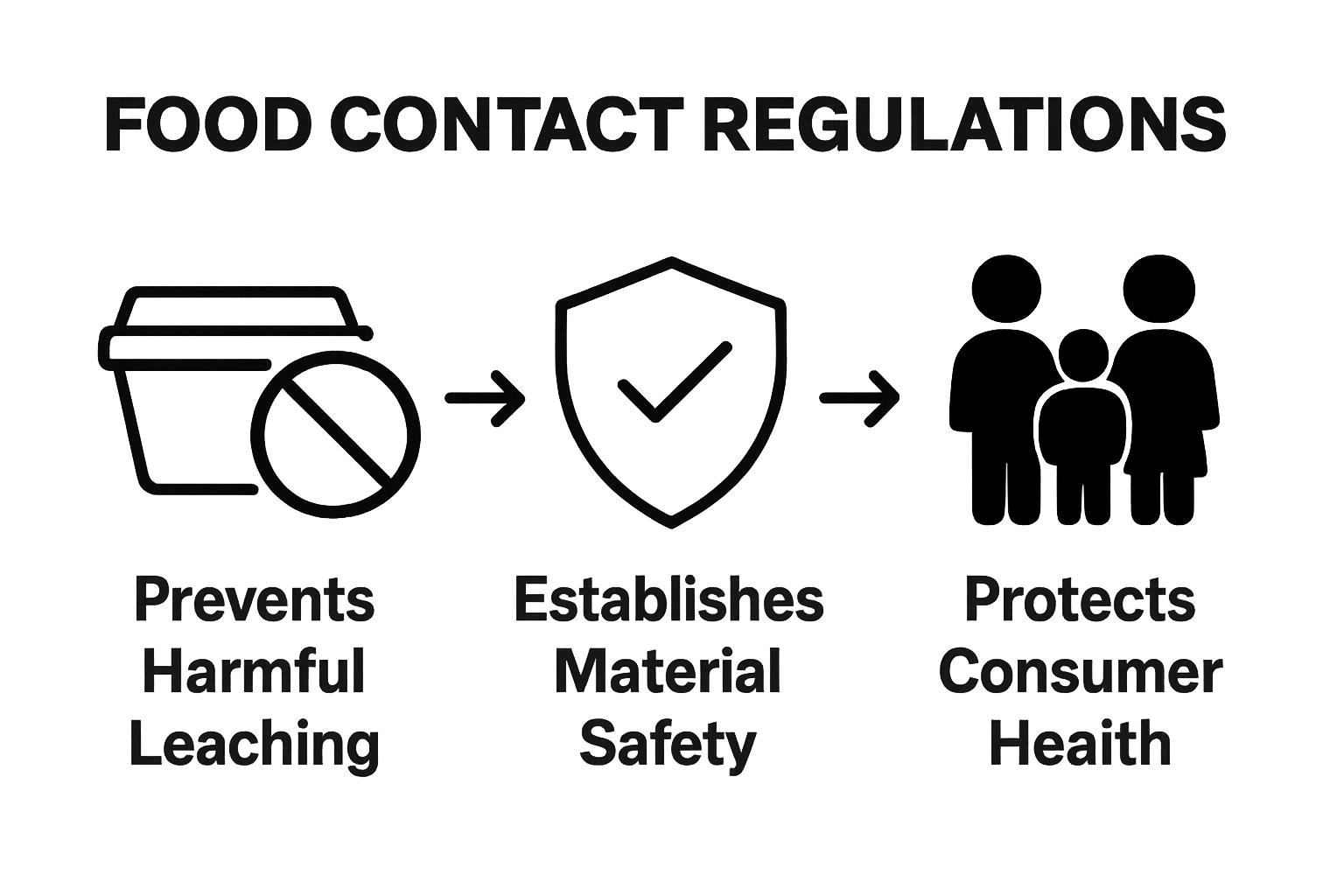
- Preventing harmful chemical leaching into food
- Establishing material safety standards
- Defining acceptable manufacturing practices
- Protecting consumer health
Scope and Comprehensive Coverage
Food contact regulations extend far beyond simple packaging guidelines. They encompass an extensive range of materials and scenarios, including:
- Food preparation surfaces
- Cooking equipment
- Transportation containers
- Storage equipment
- Single use and reusable food service items
These regulations require manufacturers and hospitality professionals to demonstrate that materials used in food environments meet rigorous safety standards. Compliance involves comprehensive testing, documentation, and ongoing quality assessments to verify that no dangerous substances can transfer from contact materials into food products.
Regulatory bodies worldwide develop these standards through scientific research, toxicological assessments, and continuous monitoring of emerging risks. The goal remains consistent: protecting public health by preventing potential chemical contamination through strategic material selection and management.
Why Food Contact Regulations Matter for Your Business
Food contact regulations are not simply bureaucratic requirements but essential risk management strategies that directly impact business sustainability, reputation, and financial stability in the hospitality industry.
Legal and Financial Risk Management
Noncompliance with food contact regulations can result in severe consequences for businesses. Centers for Disease Control and Prevention emphasizes that weak food safety practices create substantial operational risks. Potential repercussions include:
- Substantial financial penalties
- Mandatory business closure
- Loss of operational licenses
- Significant reputational damage
- Potential legal liability for consumer health incidents
Protecting Consumer Trust and Brand Reputation
Implementing robust food contact regulations demonstrates a commitment to customer safety. When hospitality businesses proactively manage material interactions with food, they communicate professionalism and care. This approach builds consumer confidence and differentiates businesses in a competitive marketplace.
Beyond immediate safety concerns, food contact regulations represent a strategic approach to quality management. By establishing comprehensive material screening protocols, businesses protect themselves from potential contamination risks and showcase their dedication to exceptional standards.
Moreover, businesses can learn more about sustainable hospitality practices that integrate regulatory compliance with environmental responsibility. This holistic approach not only mitigates risks but also positions organizations as forward thinking and socially responsible.
Comprehensive Compliance Strategy
Successful implementation of food contact regulations requires a multifaceted approach. Businesses must develop systematic processes that encompass:
- Regular material safety assessments
- Comprehensive staff training programs
- Detailed documentation of compliance efforts
- Continuous monitoring of regulatory updates
By treating food contact regulations as a strategic priority rather than a bureaucratic requirement, hospitality businesses can transform potential compliance challenges into opportunities for demonstrating excellence and building lasting consumer trust.
Key Components of Food Contact Regulations Explained
Food contact regulations constitute a sophisticated framework of guidelines designed to ensure the safety and integrity of materials that interact with food products. Understanding these complex regulations requires a deep dive into their fundamental components and underlying principles.
Material Safety and Composition Criteria
FDA Food Code establishes comprehensive guidelines for evaluating material safety in food contact environments. The primary focus is on preventing potential chemical migration and ensuring that all materials meet stringent performance standards. Critical evaluation criteria include:
- Chemical composition analysis
- Migration potential assessment
- Toxicological risk evaluation
- Long term stability testing
- Thermal resistance verification
Regulatory Compliance and Documentation Requirements
Compliance with food contact regulations extends beyond mere material selection. Businesses must maintain meticulous documentation demonstrating their commitment to safety protocols. This involves creating robust systems that track:
- Material sourcing information
- Detailed manufacturing processes
- Comprehensive testing records
- Regular quality control assessments
Hospitality professionals must develop systematic documentation strategies that provide transparent evidence of their adherence to regulatory standards. These records serve as critical protective mechanisms, helping businesses demonstrate their commitment to consumer safety.

Ongoing Monitoring and Adaptation Protocols
Regulatory compliance is not a static process but a dynamic, continuously evolving approach. Successful implementation requires businesses to establish flexible frameworks that can quickly adapt to emerging scientific understanding and regulatory updates.
Businesses can explore sustainable hospitality practices that integrate proactive regulatory compliance strategies. This approach transforms regulatory requirements from potential burdens into opportunities for innovation and continuous improvement.
Key adaptation strategies include:
- Regular training programs
- Continuous regulatory landscape monitoring
- Proactive risk assessment techniques
- Collaborative industry knowledge sharing
By understanding and implementing these comprehensive food contact regulation components, hospitality businesses can create safer environments, protect consumer health, and build robust operational frameworks that prioritize safety and quality.
To give readers a clear overview of the core features that make up food contact regulations, the following table organizes the main components explained in the article.
| Component | Description |
|---|---|
| Material Safety and Composition Criteria | Focuses on preventing chemical migration and verifying toxicological safety and stability of materials. |
| Regulatory Compliance and Documentation | Involves maintaining sourcing, testing, and manufacturing records to prove compliance with safety protocols. |
| Ongoing Monitoring and Adaptation Protocols | Requires continuous staff training and updating processes to address changing regulations and risks. |
| Scientific Evaluation Framework | Systematic steps for analyzing chemical composition, migration risk, and safety before material use. |
| Risk Assessment Methodologies | Advanced testing to simulate food contact scenarios and predict chemical transfer under various conditions. |
| Regulatory Approval Process | Submission of documentation, independent reviews, and ongoing monitoring for official material approval. |
How Food Contact Materials Are Assessed and Approved
Food contact material assessment represents a sophisticated scientific process designed to ensure consumer safety through rigorous evaluation of potential material interactions with food products. This comprehensive approach involves multiple layers of scrutiny and specialized testing protocols.
Scientific Evaluation Framework
European Food Safety Authority provides comprehensive guidelines for material assessment, establishing a systematic approach to identifying potential risks. The evaluation process encompasses several critical stages:
- Chemical composition analysis
- Potential migration risk assessment
- Toxicological impact studies
- Long term stability testing
- Comprehensive safety documentation review
Risk Assessment Methodologies
Scientific experts employ advanced methodological approaches to determine material safety. These methodologies involve sophisticated techniques that simulate real world food contact scenarios, analyzing potential chemical transfers and interactions under various environmental conditions.
Key assessment parameters include:
- Thermal stability testing
- Chemical migration potential
- Interaction with different food types
- Exposure duration evaluations
Researchers utilize complex mathematical models and experimental protocols to predict potential material behaviors, ensuring that only materials meeting stringent safety standards receive approval.
Regulatory Approval Process
The approval process extends beyond scientific testing, involving multiple regulatory oversight mechanisms. Manufacturers must provide comprehensive documentation demonstrating material safety, including detailed research findings, experimental data, and thorough risk assessment reports.
Businesses can learn more about sustainable hospitality practices that integrate advanced material assessment strategies. This approach transforms regulatory compliance from a bureaucratic requirement into a proactive safety management strategy.
Critical elements of the regulatory approval process include:
- Submission of comprehensive safety documentation
- Independent scientific review
- Rigorous testing protocol verification
- Ongoing monitoring and reassessment requirements
By implementing these sophisticated assessment frameworks, regulatory bodies ensure that only materials meeting the highest safety standards can be used in food contact environments, protecting consumer health and maintaining industry integrity.
Real-World Implications and Challenges of Food Contact Regulations
Food contact regulations represent a complex landscape of scientific, operational, and legal challenges that hospitality businesses must navigate with precision and strategic planning. Understanding these real-world implications is crucial for developing effective compliance strategies.
This table summarizes and compares the main operational and compliance challenges that hospitality businesses face with food contact regulations, making it easy to see their impact and requirements side by side.
| Challenge Category | Description | Examples Provided |
|---|---|---|
| Operational Barriers | Obstacles that make practical implementation difficult | Limited staff training, high costs, complex documentation |
| Financial Challenges | Ongoing investments beyond initial compliance | Integrating testing, monitoring, documentation, systematic training |
| Regulatory Complexity | Difficulties in keeping up with evolving and nuanced requirements | Adapting organizational structures, continuous education |
| Organizational Pressure | Need for new systems and substantial human resource commitments | Developing robust frameworks and continuous monitoring |
Operational Implementation Barriers
Global Food Safety Research highlights significant challenges in translating regulatory requirements into practical operational protocols. Hospitality businesses frequently encounter obstacles that make comprehensive compliance difficult:
- Limited staff training resources
- Complex documentation requirements
- High implementation costs
- Technical complexity of material assessments
- Inconsistent regulatory interpretations
Financial and Organizational Challenges
Implementing food contact regulations demands substantial organizational investment. Financial implications extend beyond immediate compliance costs, encompassing long term operational transformations. Businesses must develop sophisticated systems that:
- Integrate comprehensive testing protocols
- Establish continuous monitoring mechanisms
- Develop robust documentation frameworks
- Train personnel systematically
These requirements often necessitate significant financial and human resource commitments, creating substantial organizational pressure.
Emerging Regulatory Complexity
The regulatory landscape continues evolving, introducing increasingly nuanced requirements that challenge traditional hospitality operational models. Businesses must remain agile, continuously adapting to emerging scientific understanding and regulatory developments.
Businesses can explore sustainable hospitality practices that help manage these complex regulatory environments more effectively. Proactive strategies transform potential compliance challenges into opportunities for innovation and improved operational excellence.
Key strategies for managing regulatory complexity include:
- Developing flexible organizational structures
- Investing in continuous staff education
- Creating adaptive compliance frameworks
- Maintaining transparent communication channels
Successful navigation of food contact regulations requires a holistic approach that balances scientific rigor, operational practicality, and strategic foresight. By understanding these multifaceted challenges, hospitality businesses can develop robust strategies that protect consumer safety while maintaining organizational efficiency.
Turn Food Contact Compliance Into Brand Power with Compostable Straws
Struggling with the complexity of food contact regulations and worried about potential chemical migration risks? You are not alone. The hospitality industry is under constant pressure to avoid health hazards and show customers a real commitment to food safety. If you want to simplify your path to compliance and demonstrate high standards, sustainable solutions can make all the difference.
Show your dedication to both safety and the environment by choosing The Ocean Straw for wood and plant-based compostable straws. Our products are crafted to meet strict safety standards, helping you protect your customers and reduce your regulatory burden. Enhance your reputation, build consumer confidence, and turn compliance into a clear advantage for your business. Ready to make your food service safer and more sustainable? Visit our homepage and take the first step toward a safer, compliant, and greener future today.
Frequently Asked Questions
What are food contact regulations?
Food contact regulations are guidelines that govern the materials and substances that can legally interact with food during preparation, storage, and service, primarily aimed at preventing chemical migration into food products.
Why are food contact regulations important for the hospitality industry?
These regulations are critical for protecting consumer health, managing legal risks, and maintaining a strong brand reputation. Noncompliance can lead to severe financial penalties and loss of consumer trust.
How are food contact materials assessed for safety?
Food contact materials undergo a scientific evaluation process that includes chemical composition analysis, migration potential assessment, and toxicological studies to ensure they meet safety standards before approval for use.
What challenges do businesses face in complying with food contact regulations?
Businesses encounter operational barriers such as limited training resources, complex documentation requirements, high implementation costs, and the evolving nature of regulatory requirements that can complicate compliance efforts.
Recommended
- Understanding the Impact of Government Policies on Hospitality – The Ocean Straw
- What Is PLA Material? A 2025 Guide for Hotels and Restaurants – The Ocean Straw
- Understanding Green Certification Requirements for Hospitality – The Ocean Straw
- What Is Cradle to Cradle? A Simple Guide for Hospitality – The Ocean Straw