Newsroom
Understanding Diversity in Hospitality: Key Concepts Explained

Understanding Diversity in Hospitality: Key Concepts Explained
Diversity in hospitality shapes how companies connect with both guests and employees. McKinsey research shows that organizations committed to diversity outperform their competitors by a wide margin. That sounds impressive, right? Most people assume diversity is just about checking boxes or meeting quotas. Turns out, the real impact goes much deeper and transforms everything from service quality to innovation.
Table of Contents
- Defining Diversity In Hospitality: Core Principles
- The Importance Of Diversity In Hospitality: Benefits And Impact
- Key Concepts In Diversity: Inclusion, Equity, And Representation
- Challenges And Opportunities In Promoting Diversity
- Real-World Examples And Best Practices In Diversity
Quick Summary
| Takeaway | Explanation |
|---|---|
| Diversity enhances organizational performance | Organizations with diverse workforces achieve better outcomes in creativity and problem-solving. |
| Cultural competence is essential | Understanding diverse customer backgrounds leads to improved customer experiences and emotional connections. |
| Inclusive practices drive employee engagement | Organizations that foster inclusivity see higher employee retention and satisfaction levels. |
| Address systemic barriers to diversity | Identifying and dismantling biases in hiring and promotion helps create equitable opportunities for all. |
| Implement robust diversity training programs | Comprehensive training can build genuine respect and understanding among employees, enhancing workplace culture. |
Defining Diversity in Hospitality: Core Principles
Diversity in hospitality represents a comprehensive approach to creating inclusive environments that welcome, respect, and value individuals from varied backgrounds, experiences, and perspectives. This commitment goes beyond mere compliance with legal requirements and transforms workplace culture and customer experience.
Understanding the Fundamental Concept
At its core, diversity in hospitality means recognizing and embracing differences among people. These differences encompass multiple dimensions including race, ethnicity, gender, age, sexual orientation, physical abilities, religious beliefs, educational backgrounds, and socioeconomic experiences. McKinsey Research consistently demonstrates that organizations prioritizing diversity achieve significantly better performance outcomes.
Key dimensions of diversity in hospitality include:
- Representation across different demographic groups
- Inclusive hiring and promotion practices
- Creating welcoming environments for employees and guests
- Developing cultural competence within organizational frameworks
Strategic Implementation of Diversity Principles
Successful diversity integration requires intentional strategies that transform organizational culture. Hospitality leaders must move beyond surface-level representation to cultivate genuine understanding and respect. This involves developing comprehensive training programs, establishing mentorship opportunities, and creating policies that actively support marginalized groups.
Cornell University’s School of Hospitality Management emphasizes that effective diversity strategies are not just moral imperatives but critical business strategies. Organizations that successfully implement diversity initiatives often experience:
- Enhanced employee engagement
- Improved customer satisfaction
- Greater innovation and creativity
- More robust problem solving capabilities
By recognizing diversity as a strategic advantage, hospitality organizations can create more dynamic, responsive, and ultimately successful business environments that reflect the complexity of our global society.
The Importance of Diversity in Hospitality: Benefits and Impact
Diversity is no longer a peripheral consideration in the hospitality industry but a critical strategic imperative that drives organizational success and innovation. By embracing diverse perspectives, hospitality businesses can unlock remarkable potential that transforms workplace dynamics and customer experiences.
Economic and Performance Advantages
Research demonstrates that diverse organizations consistently outperform their less inclusive counterparts. Global Hospitality Research indicates companies with robust diversity strategies experience significant competitive advantages. These advantages manifest through enhanced creativity, improved problem solving, and more nuanced understanding of complex customer needs.
Key performance benefits include:
- Higher employee retention rates
- More innovative service solutions
- Increased adaptability to changing market demands
- Better customer engagement strategies
Cultural Competence and Customer Experience
In an increasingly globalized world, cultural competence becomes a critical differentiator for hospitality organizations. Understanding and respecting diverse customer backgrounds allows businesses to create more personalized, welcoming environments. Cornell University’s Hospitality Research reveals that organizations with strong diversity practices develop deeper emotional connections with customers across different demographic segments.
Strategic approaches to enhancing cultural competence involve:
- Comprehensive cross-cultural training programs
- Multilingual customer service capabilities
- Inclusive marketing and communication strategies
- Sensitivity to cultural nuances and preferences
By prioritizing diversity, hospitality businesses do more than meet ethical standards. They create dynamic, responsive environments that reflect the complexity of our global society, ultimately driving sustainable growth and meaningful connections with employees and customers alike.
Read more about how government policies impact hospitality practices in our comprehensive guide.
Key Concepts in Diversity: Inclusion, Equity, and Representation
Diversity in hospitality extends far beyond simple numerical representation. It encompasses complex interconnected principles that transform organizational culture and drive meaningful change. Understanding the nuanced relationships between inclusion, equity, and representation creates a comprehensive framework for sustainable diversity strategies.
Understanding Foundational Concepts
These three core concepts work together to create truly transformative workplace environments.
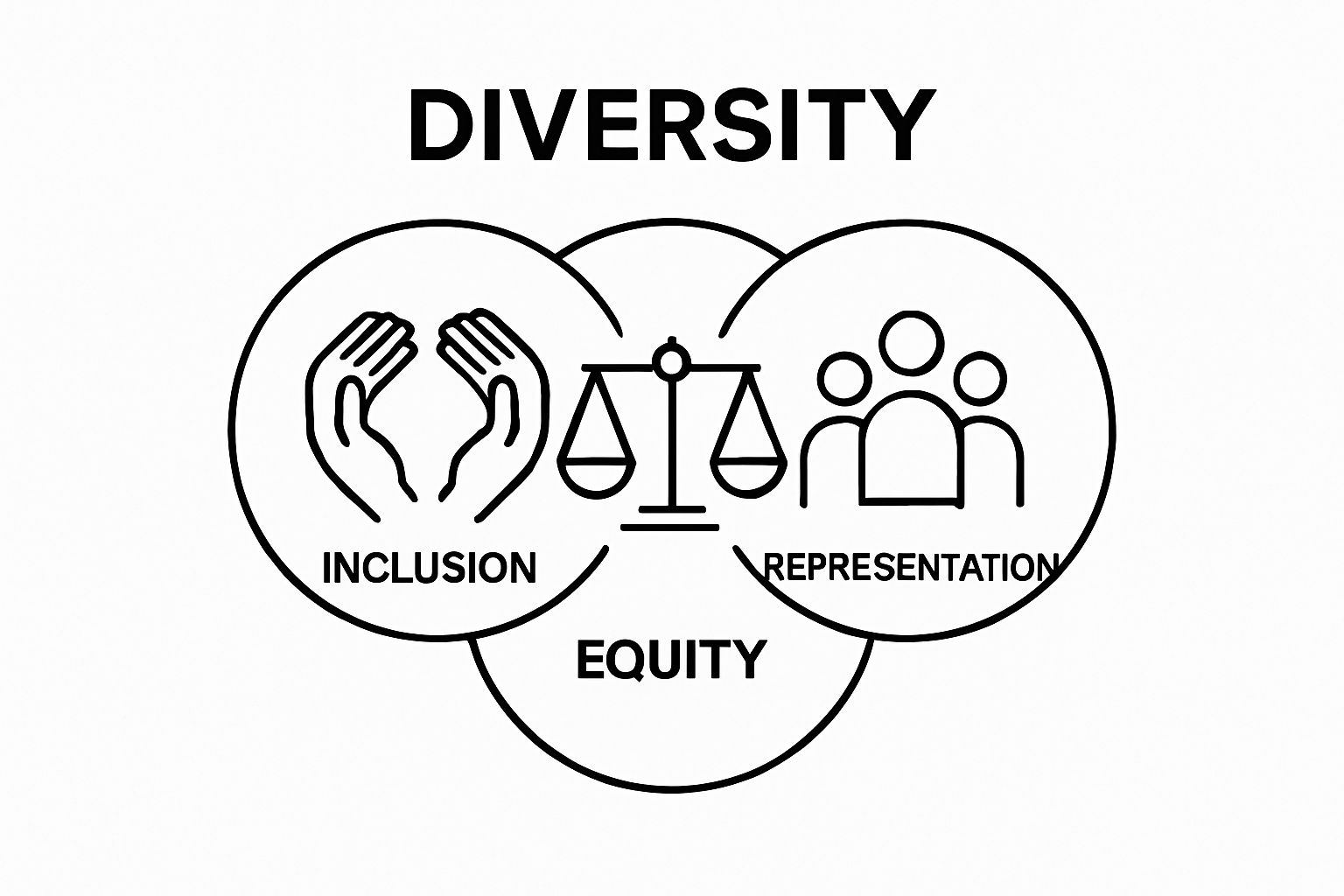 Inclusion means creating spaces where every individual feels valued, respected, and empowered to contribute fully. Equity addresses systemic barriers by ensuring fair access to opportunities, resources, and advancement. Representation ensures diverse perspectives are visibly present across all organizational levels and decision making processes.
Workplace Diversity Research demonstrates that these concepts are fundamentally interconnected and cannot be effectively implemented in isolation.
Key characteristics of these diversity principles include:
- Recognizing individual unique experiences
- Dismantling systemic barriers
- Creating supportive organizational structures
- Promoting genuine cultural understanding
Practical Implementation Strategies
Successful diversity integration requires deliberate, comprehensive approaches. Hospitality organizations must develop holistic strategies that go beyond surface level interventions. This means creating robust policies, providing ongoing training, and establishing accountability mechanisms that support genuine cultural transformation.
Effective implementation strategies involve:
- Developing transparent recruitment processes
- Creating mentorship and leadership development programs
Key focus areas for diversity advancement require continuous assessment, measurement, and commitment to meaningful organizational change. By understanding these interconnected concepts, hospitality businesses can create more dynamic, innovative, and responsive workplace environments that truly reflect our global society.
To help clarify the foundational principles of diversity in hospitality, the table below compares Inclusion, Equity, and Representation based on their definitions and roles within organizations.
| Concept | Definition | Organizational Role |
|---|---|---|
| Inclusion | Creating spaces where every individual feels valued, respected, and empowered | Ensures all voices are heard and everyone can contribute fully |
| Equity | Ensuring fair access to opportunities, resources, and advancement | Dismantles systemic barriers and promotes fairness in processes |
| Representation | Ensuring diverse perspectives are visibly present at all levels | Encourages diversity in decision making and leadership |
Explore our comprehensive guide on sustainable workplace practices to learn more about creating inclusive organizational cultures.
Challenges and Opportunities in Promoting Diversity
Promoting diversity in hospitality requires navigating complex organizational landscapes while addressing deeply entrenched systemic barriers. Understanding these challenges becomes crucial for creating meaningful transformation that goes beyond superficial representation.
Recognizing Systemic Barriers
Historically, the hospitality industry has struggled with structural inequalities that limit opportunities for marginalized groups. These barriers manifest through recruitment practices, promotional pathways, and organizational cultures that inadvertently exclude diverse talent. Hospitality Workforce Research reveals that unconscious biases and traditional hiring mechanisms frequently prevent talented professionals from underrepresented groups from accessing meaningful career opportunities.
Key systemic challenges include:
- Embedded cultural stereotypes
- Limited leadership development pathways
- Inconsistent recruitment strategies
- Inadequate mentorship programs
Transformative Strategies for Change
Successful diversity promotion requires comprehensive, intentional approaches that address root causes of inequality. Organizations must move beyond compliance-based models to develop genuine cultural transformation strategies. This involves creating supportive environments that not only welcome diversity but actively cultivate inclusive practices that empower all employees.
Strategic opportunities for meaningful change involve:
- Implementing unconscious bias training
- Developing transparent advancement mechanisms
- Creating accountability frameworks
- Establishing supportive mentorship networks
Organizational commitment to diversity represents more than a moral imperative. It becomes a critical business strategy that drives innovation, enhances employee engagement, and creates more responsive customer experiences. By systematically addressing challenges and leveraging opportunities, hospitality businesses can build dynamic, inclusive environments that reflect the rich complexity of our global society.
The following table highlights common challenges faced by hospitality organizations in promoting diversity and outlines strategic opportunities that can help address these barriers.
| Challenge | Description | Transformative Opportunity |
|---|---|---|
| Embedded cultural stereotypes | Stereotypical assumptions limiting inclusion and growth | Unconscious bias training |
| Limited leadership development pathways | Few routes for underrepresented employees to advance | Transparent advancement mechanisms |
| Inconsistent recruitment strategies | Lack of standardized, inclusive hiring practices | Proactive, transparent recruitment strategies |
| Inadequate mentorship programs | Insufficient support for professional development of diverse employees | Establishing supportive mentorship networks |
Learn more about sustainable workplace strategies and their impact on organizational success.
Real-World Examples and Best Practices in Diversity
Transforming diversity from theoretical concept to practical implementation requires concrete strategies and measurable approaches. Successful hospitality organizations demonstrate that intentional diversity practices can create meaningful workplace environments that drive innovation and organizational success.
Innovative Organizational Approaches
Leading hospitality companies are developing sophisticated diversity frameworks that go beyond traditional compliance models. These approaches focus on creating holistic environments that genuinely value and leverage diverse perspectives.
VIDEO:video_content] [Harvard Business Review Research indicates that successful diversity strategies require comprehensive, long-term commitment rather than isolated interventions.
Key characteristics of effective diversity programs include:
- Transparent leadership accountability
- Data-driven performance metrics
- Continuous learning and development
- Proactive recruitment strategies
Practical Implementation Strategies
Successful diversity initiatives require multifaceted approaches that address recruitment, retention, and advancement. Organizations must develop systematic processes that identify and eliminate barriers while creating supportive environments for underrepresented professionals.
Best practices for meaningful diversity implementation involve:
- Developing targeted mentorship programs
- Creating inclusive leadership development pathways
- Establishing employee resource groups
- Implementing unconscious bias training
Organizational transformation occurs when diversity becomes a core strategic priority, not just a compliance checkbox. By developing comprehensive approaches that recognize individual talents and perspectives, hospitality businesses can create dynamic workplace cultures that drive innovation, engagement, and sustainable growth.

Discover more about sustainable workplace strategies and their potential to revolutionize organizational performance.
Bring Diversity to Life in Your Hospitality Business
Your commitment to diversity in hospitality is more than policies or checklists. Choosing inclusive products shows that you care about representation and welcoming every guest. In the article, you learned that authentic diversity goes beyond numbers. True transformation happens when details matter, including the products you offer your customers. Are you making choices that reflect your values of equity, inclusion, and respect for all?
Make your sustainability and diversity goals visible with solutions your guests notice and appreciate. Our compostable straws for HoreCa not only support a greener planet, they also signal a culture of inclusion by providing eco-friendly options for everyone. Ready to set your business apart while advancing the values you care about? Visit The Ocean Straw today and explore how our plant-based solutions can strengthen your commitment to diversity and sustainable hospitality. Start now so your brand leads the way in meaningful change. For more details, see how our products help you deliver on your sustainability promises.
Frequently Asked Questions
What are the core principles of diversity in hospitality?
Diversity in hospitality centers around inclusion, equity, and representation. This includes recognizing individual differences, addressing systemic barriers, and ensuring diverse perspectives are represented in decision-making processes.
Why is diversity important in the hospitality industry?
Diversity is crucial as it enhances employee engagement, improves customer satisfaction, fosters innovation, and leads to better adaptability to changing market demands, ultimately driving organizational success.
How can hospitality organizations implement diversity initiatives effectively?
Effective implementation involves developing comprehensive training programs, creating mentorship opportunities, establishing accountability mechanisms, and cultivating an inclusive workplace culture.
What challenges do hospitality businesses face in promoting diversity?
Major challenges include systemic barriers such as cultural stereotypes, inconsistent recruitment strategies, and a lack of mentorship programs, which can hinder access for underrepresented groups.
Recommended
- Understanding the Impact of Government Policies on Hospitality – The Ocean Straw
- Training for Customer Service Excellence in Hospitality – The Ocean Straw
- Understanding Innovative Waste Solutions for Hospitality – The Ocean Straw
- Understanding Waste Minimization Strategies for Hospitality – The Ocean Straw