Newsroom
Social Media and Sustainability: Hotel and Restaurant Trends 2025
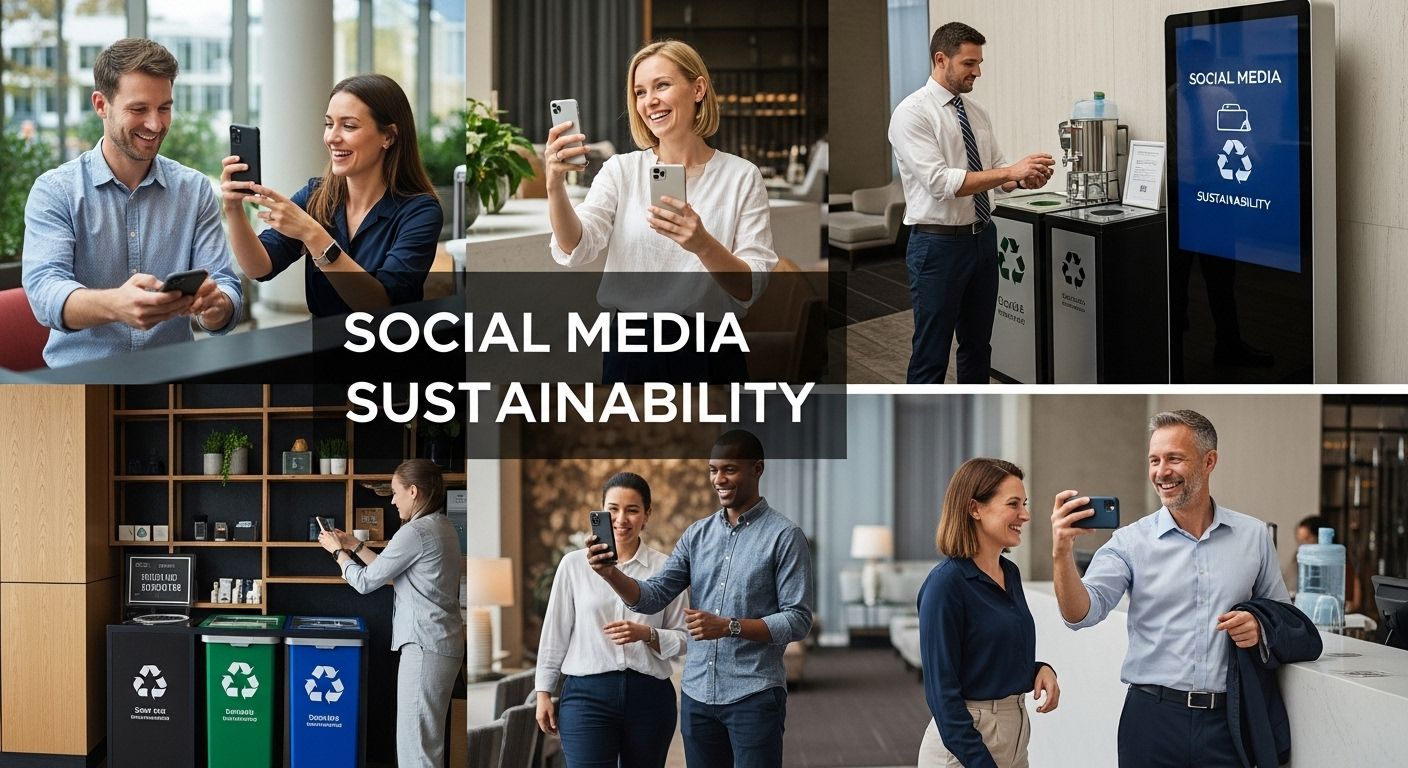
Social Media and Sustainability: Hotel and Restaurant Trends 2025
Hotels and restaurants are using social media in ways that go way beyond photos of food or fancy lobbies. Sustainability is taking center stage and it is transforming how brands connect with guests. Here is what might surprise you. Over 70 percent of Generation Z says they trust brands more when they see authentic eco efforts on social media. Turns out the real power is not in the marketing itself but in how social platforms spark real-world change and inspire millions to take action.
Table of Contents
- How Social Media Drives Sustainable Hospitality
- Best Social Media Campaigns for Sustainability
- Engaging Guests With Eco-Friendly Content
- Measuring the Impact of Social Media on Sustainability
Quick Summary
| Takeaway | Explanation |
|---|---|
| Transparency Builds Trust | Authentic storytelling about sustainability efforts enhances brand credibility with consumers, especially Generation Z. |
| Engage Users with UGC | Encouraging guests to share their sustainability experiences fosters peer validation and strengthens brand perception. |
| Interactive Campaigns Drive Action | Utilizing challenges and educational content inspires guests to actively participate in sustainability initiatives. |
| Measure Impact Effectively | Track both engagement metrics and real-world environmental outcomes for comprehensive evaluation of campaign success. |
| Foster a Sustainable Community | Creating content that connects shared values enhances brand loyalty and encourages collective environmental responsibility. |
How Social Media Drives Sustainable Hospitality
Social media has transformed how hospitality businesses communicate their sustainability efforts, creating powerful channels for engagement, education, and transparency. The digital landscape now offers unprecedented opportunities for hotels and restaurants to showcase their environmental commitments and connect with environmentally conscious consumers.
Transparency and Brand Storytelling
Modern consumers demand more than surface level sustainability claims. Research from Administrative Sciences reveals that Generation Z, in particular, expects brands to demonstrate authentic and holistic environmental responsibility. Social media platforms provide the perfect medium for businesses to share their sustainability journey transparently.
By creating compelling visual content that highlights behind the scenes sustainable practices restaurants and hotels can build trust and credibility. This might include sharing images of local sourcing, waste reduction initiatives, or energy efficient upgrades. The key is presenting genuine efforts without greenwashing.
User Generated Content and Community Engagement
A study in the Future Business Journal demonstrates that sustainable user generated content (UGC) significantly enhances brand perception. When customers share their experiences with environmentally responsible establishments, it creates a powerful form of peer validation.
Hotels and restaurants can encourage this by creating hashtag campaigns that incentivize guests to document and share sustainable experiences. For instance, a hotel might create a campaign celebrating guests who participate in linen reuse programs or a restaurant highlighting customers using reusable containers.
Strategic Social Media Sustainability Campaigns
Successful sustainability communication on social media goes beyond simple posting. As highlighted by Green Lodging News, effective campaigns combine educational content with engaging storytelling.
Businesses can leverage social media to:
- Educate followers about environmental impact
- Showcase specific sustainability initiatives
- Demonstrate measurable environmental achievements
- Invite community participation in sustainability efforts
The most impactful social media strategies treat sustainability not as a marketing tactic but as a genuine commitment to environmental stewardship. By consistently sharing authentic, transparent content, hospitality businesses can build meaningful connections with environmentally conscious consumers and contribute to broader sustainability goals.
Best Social Media Campaigns for Sustainability
Social media platforms have become powerful tools for hospitality businesses to showcase sustainability efforts and engage audiences through innovative, creative campaigns. These digital strategies not only raise awareness but also inspire meaningful environmental action among consumers and industry professionals.
Storytelling Through Visual Sustainability Narratives
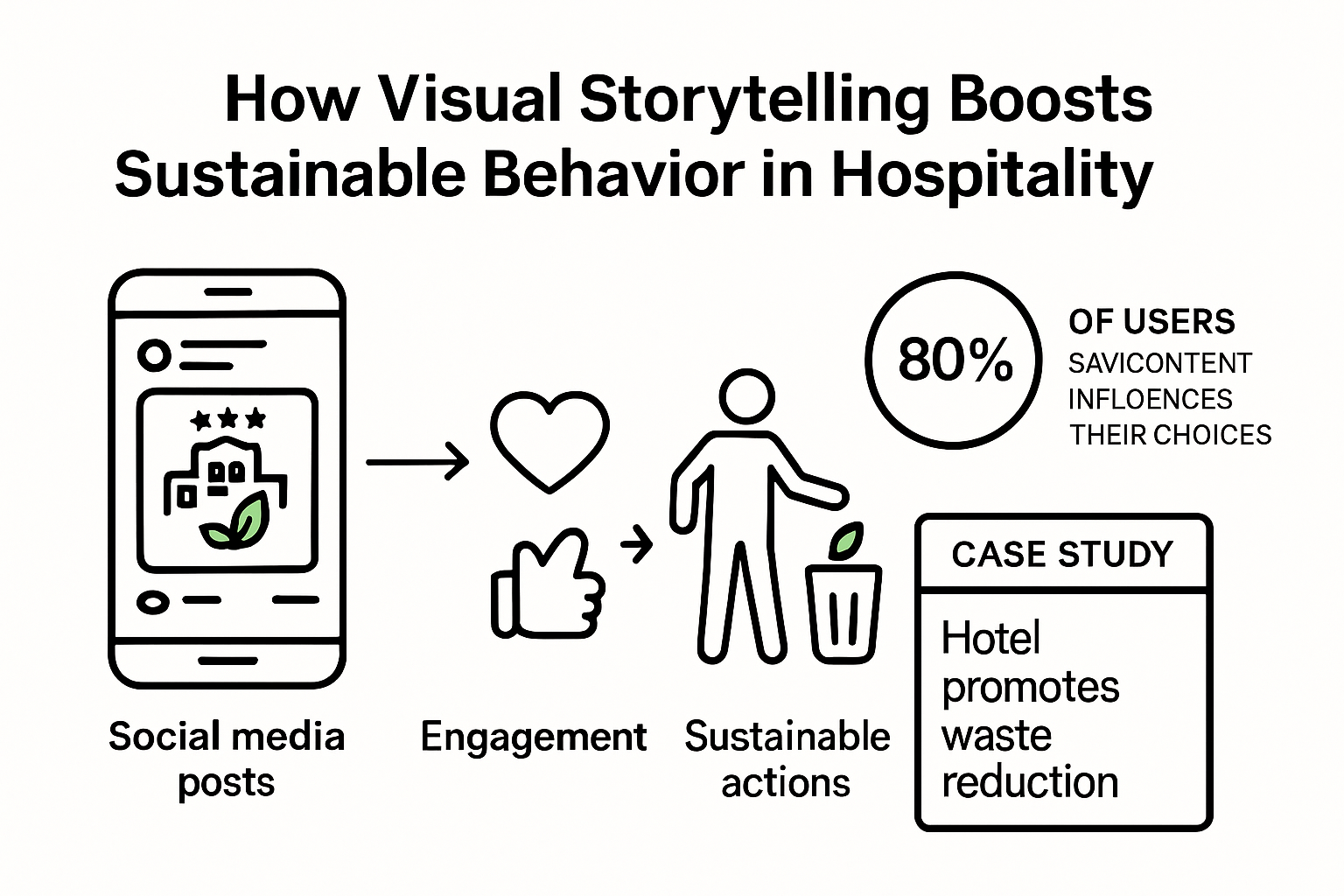
Research from the Food Waste Reduction Study demonstrates that emotional engagement is crucial in motivating sustainable behavior. Successful social media campaigns leverage compelling visual storytelling to connect with audiences on a deeper level.
For example, restaurants can create video series documenting their journey towards zero waste, showing behind the scenes processes of composting, local sourcing, and innovative waste reduction techniques. These narratives transform abstract sustainability concepts into tangible, relatable experiences that resonate with followers.
Interactive Sustainability Challenges
Hospitality Tourism International Research indicates that young travelers are particularly responsive to interactive sustainability communications. Social media campaigns that invite direct participation can significantly enhance engagement and environmental awareness.
Effective interactive campaigns might include:
- Carbon Footprint Challenges: Encouraging followers to track and reduce their personal environmental impact
- Sustainable Living Competitions: Inviting users to share their most creative eco friendly practices
- Virtual Sustainability Workshops: Hosting live sessions that educate and inspire environmental action
Below is a table summarizing different types of interactive sustainability campaigns and their key features for quick comparison:
| Campaign Type | Audience Engagement Method | Example Activity |
|---|---|---|
| Carbon Footprint Challenge | Tracking and reporting personal actions | Followers reduce individual emissions |
| Sustainable Living Competition | User submissions and sharing | Sharing creative eco-friendly practices |
| Virtual Sustainability Workshop | Live digital participation & education | Interactive webinars or workshops |
Measuring Campaign Impact and Transparency
A comprehensive study on sustainable content highlights the importance of demonstrating tangible results. Successful social media sustainability campaigns go beyond simple awareness and provide clear, measurable outcomes.
Businesses can enhance campaign credibility by:
- Sharing precise environmental metrics
- Documenting real world impact of sustainability initiatives
- Highlighting progressive steps towards environmental goals
- Maintaining transparency about challenges and continuous improvement
The most effective social media sustainability campaigns blend creativity, education, and genuine commitment. By moving beyond traditional marketing approaches and presenting authentic environmental efforts, hospitality businesses can create meaningful connections with environmentally conscious consumers and contribute to broader sustainability objectives.
Engaging Guests With Eco-Friendly Content
Creating compelling eco-friendly content that resonates with guests requires strategic planning and authentic communication. Social media provides hospitality businesses a unique platform to educate, inspire, and motivate guests towards more sustainable practices.
Interactive Sustainability Education
Research from the Tourism and Hospitality Research journal reveals innovative approaches to promoting environmental awareness through digital interactions. Specifically, the study highlights how technology like chatbots can effectively engage guests by providing real-time information about sustainability initiatives.
Successful interactive content might include:
- Sustainability Quizzes: Testing guests knowledge about environmental practices
- Carbon Footprint Calculators: Helping guests understand their personal environmental impact
- Virtual Tours of eco-friendly facilities and sustainable infrastructure
Below is a table summarizing different types of interactive sustainability education content and their purpose:
| Content Type | Purpose | Example Use Case |
|---|---|---|
| Sustainability Quiz | Engage and assess sustainability knowledge | Online quiz on eco-friendly practices |
| Carbon Calculator | Personalize environmental awareness | Let guests estimate their own carbon footprint |
| Virtual Facility Tour | Visualize eco-initiatives in practice | Online tour of sustainable building features |
Content That Inspires Action
A comprehensive study in Sustainability demonstrates that social media marketing serves as a powerful tool for promoting environmental initiatives. The key is developing content that not only informs but motivates behavioral change.
Effective content strategies include sharing practical tips for reducing environmental impact, showcasing tangible results of sustainability efforts, and creating narratives that connect individual actions to broader environmental goals. Short video tutorials, infographics, and step-by-step guides can transform abstract environmental concepts into actionable insights.
Building Community Through Shared Values
Future Business Journal research highlights how sustainable content can enhance brand identification and customer loyalty. By creating a sense of shared environmental responsibility, hospitality businesses can transform passive followers into active sustainability advocates.
This approach involves:
- Celebrating guest sustainability efforts
- Highlighting collaborative environmental initiatives
- Creating platforms for community discussion and engagement
- Recognizing and rewarding eco-friendly behaviors
The most successful eco-friendly content moves beyond mere information sharing. It creates emotional connections, provides practical value, and empowers guests to become active participants in sustainability efforts. By approaching content creation with authenticity, creativity, and genuine commitment, hospitality businesses can inspire meaningful environmental action and build stronger, more engaged communities.
Measuring the Impact of Social Media on Sustainability
Measuring the effectiveness of social media sustainability initiatives requires a comprehensive approach that goes beyond traditional marketing metrics. Hospitality businesses must develop nuanced strategies to quantify their environmental impact and communicate progress transparently.
Key Performance Indicators for Sustainability Engagement
Research from the Future Business Journal highlights the importance of tracking both firm-generated content (FGC) and user-generated content (UGC) to understand sustainability communication effectiveness. Meaningful metrics extend far beyond simple engagement rates and likes.
Critical performance indicators include:
- Behavioral Change Metrics: Tracking actual sustainable actions taken by followers
- Knowledge Retention: Measuring improvements in environmental awareness
- Conversion Rates: Analyzing how social media content translates into sustainable choices
- Community Growth: Monitoring the expansion of environmentally conscious networks
Below is a table summarizing key performance indicators (KPIs) for measuring sustainability engagement via social media:
| KPI | What it Measures | Example Metric |
|---|---|---|
| Behavioral Change | Actual sustainable actions by followers | Linen reuse program participation |
| Knowledge Retention | Environmental awareness improvements | Sustainability quiz score increase |
| Conversion Rate | Content-driven sustainable choices | % of guests opting for eco-programs |
| Community Growth | Expansion of engaged sustainable audience | Growth in hashtag campaign followers |
Quantifying Environmental Impact
A study in Sustainability demonstrates the potential of social media in driving food waste reduction and environmental awareness. Effective measurement requires a multifaceted approach that combines digital analytics with tangible environmental outcomes.
Businesses can evaluate their impact by:
- Calculating carbon emissions reduced through shared sustainable practices
- Tracking waste reduction directly attributed to social media campaigns
- Measuring water and energy conservation inspired by digital content
- Documenting shifts in consumer behavior and purchasing decisions
Advanced Analytics and Sustainability Reporting
Empirical research on restaurant social media reveals the critical role of advanced analytics in understanding sustainability impact. Modern hospitality businesses must move beyond surface level metrics to develop comprehensive sustainability reporting frameworks.
Advanced measurement techniques include:
- Sentiment analysis of sustainability conversations
- Tracking long-term environmental attitude changes
- Correlating social media engagement with actual sustainability investments
- Developing predictive models for environmental impact
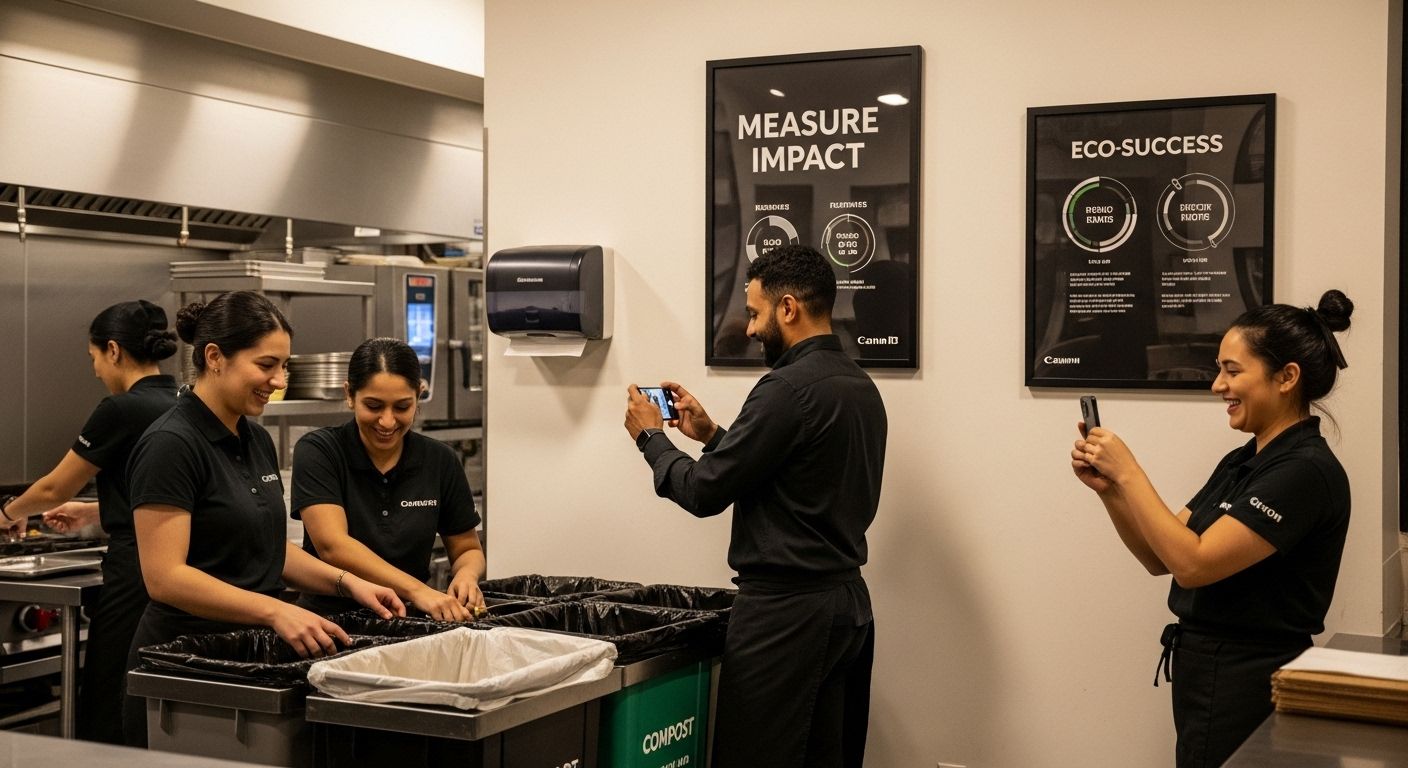
The most sophisticated approach to measuring social media sustainability impact recognizes that true success extends beyond numbers. It requires a holistic understanding of how digital communication can inspire meaningful environmental action. By combining rigorous analytics with genuine commitment to sustainability, hospitality businesses can transform social media from a marketing tool into a powerful platform for environmental education and change.
Frequently Asked Questions
What role does social media play in promoting sustainability in hotels and restaurants?
Social media empowers hotels and restaurants to showcase their sustainability initiatives, engage customers, and educate them about environmentally friendly practices. Authentic storytelling and community engagement on these platforms can enhance brand trust, particularly among younger generations.
How can user-generated content (UGC) enhance sustainability campaigns in the hospitality industry?
User-generated content fosters peer validation and enhances brand perception. When customers share their positive sustainability experiences, it creates authentic endorsements that can influence other guests to engage with the brand and its sustainability initiatives.
What are effective strategies for hotels and restaurants to measure the impact of their sustainability campaigns on social media?
Businesses should track key performance indicators such as behavioral change metrics, knowledge retention, conversion rates, and community growth. Measuring both the engagement rates and real-world environmental outcomes can provide a comprehensive understanding of a campaign’s success.
How can hotels and restaurants create engaging eco-friendly content on social media?
To create engaging eco-friendly content, businesses can utilize interactive educational materials, share practical tips for sustainability, and celebrate guest participation. This approach not only informs but also inspires audiences to take action towards a more sustainable lifestyle.
Make Your Sustainability Story Real With Compostable Straws
Sustainable hospitality means more than just talking about eco-friendly choices. Guests today are looking for proof. Social media users respond best to authentic action, and images of reusable and compostable products tell a stronger story than words alone. If you want to inspire confidence and build trust, your hotel or restaurant needs visible, transparent change customers can share online. Pain points like plastic waste or greenwashing claims are easy to solve when you switch to proven eco-friendly supplies.
Show your guests and your followers what real sustainability looks like. Our compostable straws are plant-based and designed for the HoReCa industry. They fit perfectly with a digital campaign focused on environmental action and measurable impact. Visit theoceanstraw.com and take your first step to a greener reputation that customers will love to post about. Make your next social media story truly unforgettable by making sustainable choices today.
Recommended
-
[
Hotellmagasinet – TOS Norway AS -
[
The Ocean Straw -
[
Our best-selling Ocean Straw NO – The Ocean Straw](https://www.theoceanstraw.com/pages/our-best-selling-ocean-straw-no)
-
[
Meeting - Dubai – The Ocean Straw -
Boost Hotel Bookings: Effective Hotel Digital Marketing Strategies
-
Tendencias de marketing 2025 para impulsar el crecimiento digital