Newsroom
How to Market Sustainability: A Guide for Hotels and Restaurants 2025
How to Market Sustainability: A Guide for Hotels and Restaurants 2025
Hospitality brands everywhere are racing to show their love for the planet. A stunning 73 percent of global consumers are now willing to change their habits to reduce environmental harm. Most hotels and restaurants respond by highlighting bamboo straws and energy-saving bulbs. Yet the biggest difference comes from authentic strategies that go far beyond window dressing. There is real power in turning environmental talk into measurable and transparent action.
Table of Contents
- Understanding Sustainable Marketing In Hospitality
- Practical Strategies To Promote Sustainability
- Engaging Guests And Staff In Green Initiatives
- Measuring And Showcasing Your Sustainability Impact
Quick Summary
| Takeaway | Explanation |
|---|---|
| Implement transparent communication | Authentic storytelling and data sharing build consumer trust in sustainability efforts. |
| Engage both guests and employees | Foster a culture of environmental responsibility through education and participation initiatives. |
| Measure and showcase sustainability impacts | Regular assessments and visible reporting enhance credibility and drive continuous improvement in practices. |
| Focus on community partnerships | Collaborate with local entities to promote conservation and enhance sustainability through shared efforts. |
| Adopt a holistic green marketing strategy | Integrate sustainability into all aspects of operations to resonate with environmentally-conscious consumers. |
Understanding Sustainable Marketing in Hospitality
Sustainable marketing in the hospitality industry represents a strategic approach that goes beyond traditional promotional methods. It encompasses a holistic strategy of communicating environmental and social responsibility while creating genuine value for both businesses and consumers.
The Strategic Imperative of Green Marketing
Hospitality businesses are experiencing a significant shift in consumer expectations. Research from Harvard Business Review reveals that 73% of global consumers would change their consumption habits to reduce environmental impact. This transformation requires a nuanced understanding of how to market sustainability effectively.
Green marketing is not merely about showcasing eco-friendly practices but demonstrating a comprehensive commitment to environmental stewardship. According to research exploring green marketing strategies, successful implementation involves four critical dimensions: green products, promotions, distribution, and pricing.
Communication and Transparency in Sustainable Marketing
Effective sustainable marketing demands authentic communication. Consumers are increasingly sophisticated and can quickly detect greenwashing or superficial environmental claims. Successful hotels and restaurants must develop transparent narratives that showcase genuine sustainability efforts.
Key strategies include:
- Authentic Storytelling: Highlight specific sustainability initiatives with measurable outcomes
- Data Transparency: Share concrete metrics about waste reduction, energy efficiency, and carbon footprint
- Stakeholder Engagement: Demonstrate how sustainability benefits employees, local communities, and the environment
Building Consumer Trust Through Sustainable Practices
Consumer trust is the cornerstone of sustainable marketing. Academic research investigating green marketing strategies indicates that brands implementing genuine sustainability practices experience enhanced brand awareness and loyalty.
The most successful hospitality businesses will integrate sustainability into their core business model rather than treating it as a peripheral marketing strategy. This approach requires a comprehensive commitment that touches every aspect of operations from supply chain management to customer experience.
By embracing sustainable marketing, hotels and restaurants can differentiate themselves in a competitive market, attract environmentally conscious consumers, and contribute to meaningful environmental change. The future of hospitality marketing is not just about selling a service but selling a responsible, forward-thinking vision that resonates with modern consumers’ values and expectations.
Practical Strategies to Promote Sustainability
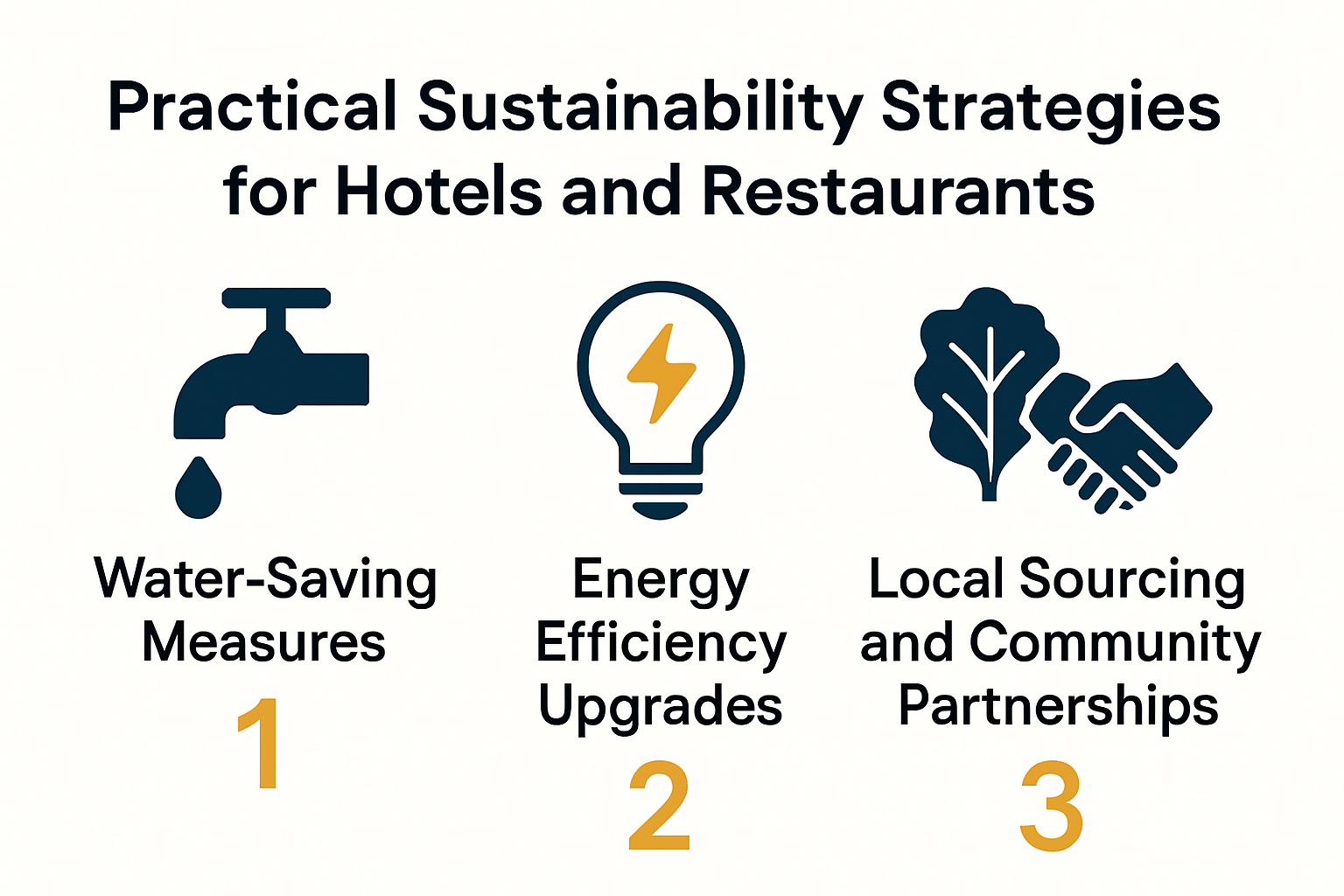 Sustainability in hospitality requires actionable strategies that transform environmental commitments into tangible operational practices. Hotels and restaurants must move beyond theoretical concepts and implement concrete approaches that demonstrate genuine environmental responsibility.
Water Conservation and Resource Management
EHL Hospitality Insights reveals critical approaches for reducing water consumption. Practical implementations include installing low-flow fixtures, implementing smart leak-detection systems, and developing rainwater harvesting strategies. Specific techniques like reducing shower pressure and creating efficient laundry programs can significantly minimize water waste.
Beyond water management, establishments should focus on comprehensive resource optimization. This means examining every aspect of operations through a sustainability lens. Energy-efficient appliances, motion-sensor lighting, and smart temperature control systems represent foundational steps in reducing environmental impact while simultaneously lowering operational costs.
To help summarize the major practical strategies for promoting sustainability discussed in this section, the following table organizes key actions and their example implementations.
| Sustainability Strategy | Example Implementations |
|---|---|
| Water Conservation | Low-flow fixtures, leak detection, rainwater harvesting, efficient laundry |
| Energy Optimization | Energy-efficient appliances, motion-sensor lighting, smart temperature control |
| Community Engagement | Hosting local events, cultural workshops, performances |
| Local Partnerships | Source local ingredients, partner with conservation groups |
| Transparent Communication | Detailed sustainability metrics, visual storytelling, impact reporting |
Community Engagement and Local Partnerships
The Sustainable Tourism Alliance emphasizes the importance of community involvement in sustainable practices. Hospitality businesses can create meaningful impact by hosting local cultural events, workshops, and performances that showcase regional heritage while educating guests about environmental conservation.
Strategic local partnerships amplify sustainability efforts. By collaborating with environmental organizations, restaurants and hotels can:
- Source Local Ingredients: Reduce transportation emissions
- Support Regional Ecosystems: Partner with conservation groups
- Create Educational Opportunities: Develop guest experiences that promote environmental awareness
Marketing and Communication of Sustainable Practices
Transparent communication about sustainability initiatives is crucial. Guests increasingly seek establishments that demonstrate genuine environmental commitment. Effective marketing strategies involve:
- Detailed reporting of sustainability metrics
- Visual storytelling about environmental initiatives
- Clear communication of measurable ecological impacts
By integrating these practical strategies, hospitality businesses can create a holistic approach to sustainability that benefits the environment, supports local communities, and attracts environmentally conscious consumers. The key lies in authentic implementation and consistent communication of meaningful efforts.
Engaging Guests and Staff in Green Initiatives
Successful sustainability strategies in hospitality require active participation from both guests and employees. Creating a culture of environmental responsibility involves thoughtful engagement, education, and empowerment across all organizational levels.
Cultivating Employee Environmental Leadership
Research in Frontiers in Psychology demonstrates that environmentally-specific leadership significantly influences employees’ green behaviors. Hotels and restaurants can transform their organizational culture by implementing comprehensive environmental training programs and recognition systems that motivate staff to adopt sustainable practices.
Leadership plays a crucial role in this transformation. EHL Hospitality Insights emphasizes that fostering a green culture requires committed leadership, clear sustainability strategies, and continuous employee engagement. This approach helps create a workplace environment where environmental responsibility becomes an integral part of organizational identity.
Key strategies for employee engagement include:
- Sustainability Training: Regular workshops on environmental practices
- Recognition Programs: Rewards for innovative green initiatives
- Green Team Development: Cross-departmental sustainability committees
The following table provides a checklist of key green initiatives for engaging both employees and guests, as highlighted in this section.
| Initiative | Target Group | Status Example |
|---|---|---|
| Sustainability Training | Employees | Ongoing |
| Recognition Programs | Employees | Active |
| Green Team Development | Employees | Established |
| Sustainability Displays | Guests | Implemented |
| Optional Participation Programs | Guests | Available |
| Real-Time Sustainability Metrics | Guests/Staff | Visible |
Guest Participation and Education
Research from the Journal of Environmental Health Science and Engineering highlights that implementing green practices not only reduces environmental impact but also enhances customer retention and overall satisfaction. Guests are increasingly interested in participating in sustainability efforts during their stay.
Effective guest engagement strategies include:
- Interactive Sustainability Displays: Informative graphics showing environmental impact
- Optional Participation Programs: Towel reuse, energy conservation options
- Transparent Reporting: Sharing real-time sustainability metrics
Measuring and Communicating Impact
Transparency is critical in sustainability efforts. Establishments should develop clear mechanisms for tracking and communicating environmental progress. This involves creating accessible reports that demonstrate tangible outcomes of green initiatives, helping both employees and guests understand their collective impact.
By creating a collaborative approach to sustainability, hospitality businesses can transform environmental responsibility from a corporate mandate to a shared mission. The most successful initiatives will be those that make sustainability engaging, educational, and personally meaningful for both staff and guests.
Ultimately, green initiatives are most effective when they move beyond compliance to create genuine connections. When employees feel empowered and guests feel involved, sustainability becomes more than a strategy—it becomes a collective commitment to protecting our shared environment.
Measuring and Showcasing Your Sustainability Impact
Measuring sustainability impact is more than a compliance exercise. It represents a strategic approach to understanding, improving, and communicating environmental performance for hospitality businesses.
Comprehensive Sustainability Assessment Tools
Research examining environmental sustainability assessment techniques reveals multiple sophisticated approaches for evaluating organizational environmental performance. Hotels and restaurants can leverage tools like Environmental Impact Assessment (EIA), Life Cycle Assessment (LCA), and the Environmental Sustainability Index (ESI) to gain comprehensive insights into their ecological footprint.
These assessment methodologies enable businesses to evaluate critical metrics such as energy consumption, waste management, water conservation, and carbon emissions. By systematically analyzing these dimensions, organizations can identify improvement opportunities and track meaningful progress toward sustainability goals.
Key Performance Metrics and Tracking
Energy management resources highlight the importance of specific metrics like Energy Use Intensity (EUI). This metric measures energy consumption per square foot annually, providing a standardized method for benchmarking and comparing performance across different facilities.
Effective sustainability tracking involves:
- Comprehensive Data Collection: Implement robust monitoring systems
- Regular Performance Reviews: Quarterly sustainability assessments
- Transparent Reporting: Publicly share verified environmental metrics
Communicating Sustainability Achievements
The U.S. Department of Energy’s Better Buildings Initiative emphasizes the importance of developing performance scorecards and verification processes. These tools not only help internal management but also provide compelling narratives for guests and stakeholders.
Successful communication strategies include:
- Creating visually engaging sustainability reports
- Developing interactive digital platforms showcasing environmental progress
- Highlighting specific achievements and future sustainability commitments
By adopting a data-driven approach to sustainability measurement, hospitality businesses can transform environmental responsibility from an abstract concept into a tangible, measurable commitment. The most effective organizations will use these metrics not just for reporting but as strategic tools for continuous improvement and innovation.
Measuring sustainability impact is an ongoing journey. It requires consistent effort, technological integration, and a genuine commitment to environmental stewardship. As metrics become more sophisticated and transparent, businesses that embrace comprehensive assessment will lead the way in creating a more sustainable hospitality industry.
Frequently Asked Questions
How can hotels and restaurants effectively market their sustainability efforts?
Hotels and restaurants can market their sustainability efforts by developing authentic communication strategies, engaging both guests and employees in green initiatives, and showcasing measurable impacts of their sustainability practices.
What are some practical strategies for promoting sustainability in hospitality?
Practical strategies include implementing water conservation measures, optimizing energy usage, engaging in community partnerships, and transparently communicating sustainability metrics to guests and stakeholders.
How important is consumer trust in sustainable marketing?
Consumer trust is essential for sustainable marketing; it is built through transparent communication, genuine sustainability efforts, and a consistent commitment to environmental responsibility that resonates with customers’ values.
What metrics should hotels and restaurants track to showcase their sustainability impact?
Hotels and restaurants should track metrics such as energy use intensity, water consumption, waste management, and carbon emissions to measure and communicate their sustainability progress effectively.
Take Your Hotel or Restaurant’s Green Marketing From Words to Action
Hotel and restaurant leaders today face growing pressure to back up green marketing with real, visible change. While the article explains the risk of greenwashing and the need for transparency, your customers want evidence of true commitment. The real challenge is turning sustainability ideals into memorable guest experiences and concrete impact. If you want results guests can see and talk about, start where it matters most—the everyday details that define your brand.
Every meal or drink served with a disposable straw becomes your chance to turn sustainability promises into reality. Choose plant-based and compostable straws trusted by the HoreCa market. See how easy and impactful it is to transition your operations. Visit The Ocean Straw for solutions that align with authentic sustainable marketing. Make your next supply decision part of your story. Contact us today and show your guests you lead with action, not empty claims.